
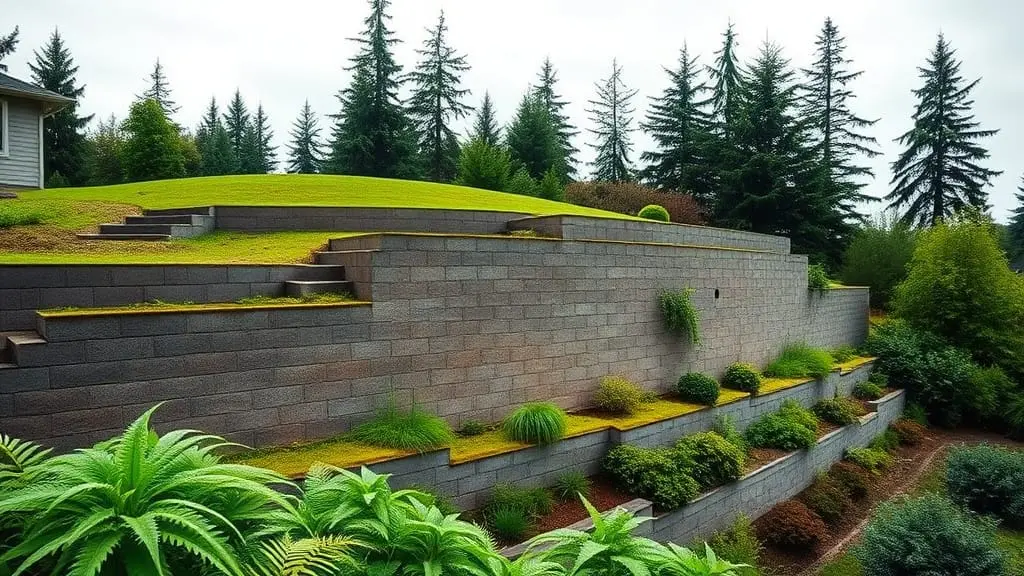
Retaining Wall Construction for Bellingham's Hillside Properties
Bellingham's dramatic topography—from the steep bluffs overlooking Bellingham Bay to the rolling hills of South Hill and Alabama Hill to the challenging slopes of Sudden Valley—creates both stunning views and serious site challenges. Retaining walls are often the only practical solution for managing elevation changes, controlling erosion, and creating usable outdoor space on sloped properties. With over 15 years constructing walls throughout Whatcom County, we've engineered and built everything from decorative 2-foot garden terraces in Fairhaven to engineered 12-foot structural walls on South Hill that hold back tons of earth while creating level building pads.
Why Bellingham's Terrain Demands Expertise
Retaining wall design in Bellingham requires understanding our specific geological challenges. First, our soil composition varies dramatically. Properties in the Mount Baker foothills encounter dense glacial till—rocky, compacted soil left by retreating glaciers 12,000 years ago. While stable when undisturbed, glacial till creates massive lateral pressure on retaining walls and requires robust drainage systems. Near Bellingham Bay and in low-lying neighborhoods like Birchwood, we encounter marine clay that holds moisture and creates significantly higher lateral loads than sandy or gravelly soils.
Second, Bellingham's 40+ inches of annual rainfall means retaining walls face constant water pressure. Without proper drainage systems, hydrostatic pressure builds behind walls, dramatically increasing lateral loads and causing failure—even in well-constructed walls. We've replaced dozens of failed retaining walls across Whatcom County where the original contractor skipped proper drainage, and the walls succumbed to water pressure within 5-10 years.
Third, many Bellingham properties feature steep natural slopes or were graded with uncompacted fill soil during original construction. Homes in South Hill, Alabama Hill, and parts of the Lettered Streets often sit on lots with 15-30% grades, and previous owners sometimes added fill soil to create level areas without proper compaction or engineering. These situations require careful evaluation—we always test soil bearing capacity and evaluate slope stability before designing walls.
Engineering Requirements for Whatcom County
Washington State and local jurisdictions have specific regulations for retaining wall construction. Generally, walls over 4 feet in height require engineered plans and building permits from the City of Bellingham or Whatcom County. However, even walls under 4 feet may require engineering if they support structures, have surcharge loads (slopes continuing above the wall), or are located in critical areas like steep slopes, wetlands, or shorelines.
We work with licensed structural engineers familiar with Bellingham's soil conditions who design walls to meet local code requirements. Engineering fees typically run $1,500-3,500 depending on wall complexity, and permits add another $500-1,500. While these costs add to upfront investment, they're legally required and ensure your wall will perform safely for decades.
Properties within the Lake Whatcom watershed face additional environmental review to ensure walls don't impact water quality or salmon habitat. Shoreline properties along Bellingham Bay, Lake Whatcom, or Lake Padden must comply with Shoreline Management Act requirements, often requiring special permits and design considerations. We've navigated these regulations dozens of times and can guide you through the requirements specific to your property.
Retaining Wall Types and Applications
Poured Concrete Cantilever Walls
Poured concrete cantilever walls are our most common solution for heights over 4 feet where engineering is required. These walls consist of reinforced concrete with an L-shaped cross-section—the vertical wall face and a horizontal base that extends back beneath the retained soil. The weight of soil on this heel section helps stabilize the wall, while steel reinforcement (typically #4 or #5 rebar on 12-18 inch centers) provides structural strength.
We excavate to stable bearing soil (often 3-4 feet below final grade in Bellingham's variable soils), pour a reinforced footing below frost depth (typically 18 inches), and construct the wall using forms and concrete. Behind the wall, we install drainage systems—perforated pipe surrounded by gravel—that collect water and direct it to daylight or the stormwater system. Backfill consists of free-draining material (crushed rock or gravel) for at least 18 inches behind the wall, reducing hydrostatic pressure.
Last year, we constructed a 42-foot-long, 8-foot-high cantilever wall on Alabama Hill that created a level backyard pad from a 25% slope. The engineered wall included 3-foot-deep footings, #5 rebar grid, and comprehensive drainage system. One year later through heavy winter rains and freeze-thaw cycles, the wall shows no movement or cracking—exactly as designed.
Poured cantilever walls cost $150-300 per linear foot depending on height and site conditions. They're the most permanent solution, require minimal maintenance, and can incorporate decorative finishes like form liner textures or stone veneer for aesthetics.
Decorative Block Walls (Segmental Retaining Walls)
Modular concrete block systems like Allan Block, Versa-Lok, or Keystone are popular for walls 3-6 feet high, offering faster installation and attractive appearance at lower cost than poured concrete. These interlocking blocks don't require mortar—they rely on mass, friction, and engineered design to resist soil pressure. Most systems feature integral drainage pathways, and installation includes gravel backfill and drainage pipe behind blocks.
We've installed hundreds of block walls across Bellingham, particularly in residential applications where decorative appearance matters. These walls work beautifully for terraced gardens in Fairhaven, yard leveling in Cordata, or driveway retention in the Lettered Streets. They come in various colors and textures, from smooth contemporary finishes to natural stone appearances that complement Pacific Northwest landscaping.
For walls over 4 feet or with slopes above, engineering is still required—these aren't DIY projects despite their modular nature. Proper base preparation (6-12 inches of compacted crushed rock), correct setback (each course steps back slightly to lean into the retained soil), and adequate drainage are critical for long-term performance.
Block wall costs run $80-150 per linear foot for walls 3-4 feet high, increasing with height and site complexity. We recently completed a stunning three-tier terraced garden on South Hill using charcoal-colored blocks, creating 900 square feet of usable planting beds where only steep slope existed before. The terraced design transformed an unusable hillside into the property's showcase feature.
Gravity Walls
For walls under 3 feet, gravity walls using natural stone or decorative concrete blocks without engineering may be appropriate. These walls resist lateral pressure through sheer mass—they're thick relative to their height and don't require reinforcement or footings below frost line. We construct gravity walls using stacked natural basalt or granite stones, creating rustic borders for gardens, walkways, or gentle slope transitions.
Gravity walls work well in Fairhaven and Edgemoor gardens where natural aesthetic is desired, or for interior terracing within already-level yards. They're not appropriate for significant grade changes or heavy surcharge loads. Costs run $40-80 per linear foot depending on materials and design complexity.
Rock Crib and Gabion Walls
For very tall walls or situations where drainage is critical, rock crib or gabion systems offer solutions. Gabions are wire mesh baskets filled with rock, stacked to create permeable retaining structures. They handle drainage naturally, work well in marine environments, and provide organic appearance. We've used gabion walls along streams and in situations where conventional drainage would be difficult. Costs are comparable to decorative block walls but material availability and specialized installation limit their use to specific applications.
Erosion Control and Slope Stabilization
Many Bellingham retaining wall projects include erosion control objectives—particularly properties near the Lake Whatcom watershed where sediment runoff impacts water quality. We integrate erosion control measures including:
- Terracing: Multiple shorter walls instead of one tall wall, creating planting zones that stabilize soil and manage runoff
- Drainage integration: Surface water collection and controlled discharge preventing erosion below walls
- Vegetation establishment: Native plantings above and adjacent to walls providing root structure that stabilizes slopes
- Geotextile reinforcement: Synthetic fabric layers within backfill creating reinforced soil zones that improve stability
Last fall, we completed an erosion control project in the Sudden Valley area where a 30-foot section of steep slope was slumping toward the homeowner's garage. We installed a two-tier block wall system with integrated drainage, regraded the slope above, and established native vegetation. The combination stopped the erosion and created an attractive landscaped feature from what had been a muddy eyesore.
Soil Bearing Capacity and Site Evaluation
Before designing any retaining wall, we evaluate soil bearing capacity at footing depth and analyze the soil being retained. Bellingham's glacial till typically provides excellent bearing capacity (3,000-4,000 pounds per square foot or more), while marine clay may have poor bearing requiring deeper footings or specialized designs. We sometimes perform test excavations or coordinate geotechnical evaluation for large projects or challenging sites.
The soil being retained affects design as dramatically as bearing soil. Granular soils (sand, gravel) create less lateral pressure than clay soils, allowing less robust (and less expensive) wall designs. When we encounter poor retention soils, we sometimes replace them with engineered fill—crushed rock or gravel that drains freely and creates minimal lateral loads.
Drainage Systems: The Critical Component
We cannot overstate drainage importance for Bellingham retaining walls. In our wet climate, water will find its way behind walls, and without proper drainage, hydrostatic pressure will cause failure. Every wall we build includes comprehensive drainage:
- Perforated drainage pipe: Installed at footing level behind walls, surrounded by gravel, directing water to daylight discharge
- Gravel backfill: Minimum 18-inch zone of crushed rock behind walls providing drainage pathway to the footer drain
- Filter fabric: Separating gravel from native soil, preventing fine particles from migrating into drainage zones and clogging pipes
- Weep holes: For solid-face concrete walls, 3-inch-diameter pipes through the wall every 6-8 feet, allowing water to drain through the wall face rather than building pressure behind it
- Surface water management: Swales, gutters, or berms above walls directing surface runoff away from the wall, reducing water volume that must be managed by the drainage system
Cost Factors for Whatcom County Retaining Walls
Retaining wall costs vary based on height, length, soil conditions, access, and finish. General ranges for Bellingham area:
- Gravity walls (under 3 feet): $40-80 per linear foot
- Decorative block walls (3-6 feet): $80-150 per linear foot
- Engineered poured concrete (over 6 feet): $150-300+ per linear foot
- Engineering and permits: $2,000-5,000 for typical projects
Site conditions dramatically affect costs. Walls in South Hill or Alabama Hill with steep access may require hand excavation or specialized equipment. Rocky glacial till requires hydraulic hammers to excavate footings. Poor bearing soils may require deeper footings or soil stabilization. We provide detailed estimates after thorough site evaluation—retaining wall costs are too site-specific for accurate phone quotes.
Design Considerations and Aesthetics
While structural performance is paramount, aesthetics matter too. We help clients select materials and finishes that complement home architecture and landscaping. Form liner textures can create stone, brick, or wood appearances in poured concrete. Decorative blocks offer numerous color and texture options. Caps, integrated lighting, and planters can transform functional retaining walls into landscape features.
For properties visible from the street or neighboring homes, we design walls that enhance rather than detract from property appearance. A recent project in Edgemoor used natural basalt veneer over concrete structure, creating a wall that looks like dry-stacked stone while providing engineered structural performance. The result is both functional and beautiful—retaining 6 feet of grade change while appearing to be natural outcropping.
Maintenance and Longevity
Properly constructed retaining walls require minimal maintenance. Annual inspection should verify drainage pipes remain clear (sometimes roots or debris cause clogs), no cracking or tilting has developed, and weep holes drain freely. Most concrete walls last 50+ years, while block systems typically provide 30-40 years of service. The most common issue we see is clogged drainage causing pressure buildup—usually resolved by clearing drain outlets or installing cleanouts for future access.
Whether you need to create a level building pad on a South Hill lot, control erosion on a Sudden Valley slope, or build terraced gardens in your Fairhaven yard, retaining walls require the combination of engineering knowledge, construction expertise, and understanding of Bellingham's specific challenges that we bring to every project.
Ready to get started? Contact us today for a free estimate — we serve all of Bellingham and Whatcom County.
Why Choose Bellingham Concrete Contractors?


