
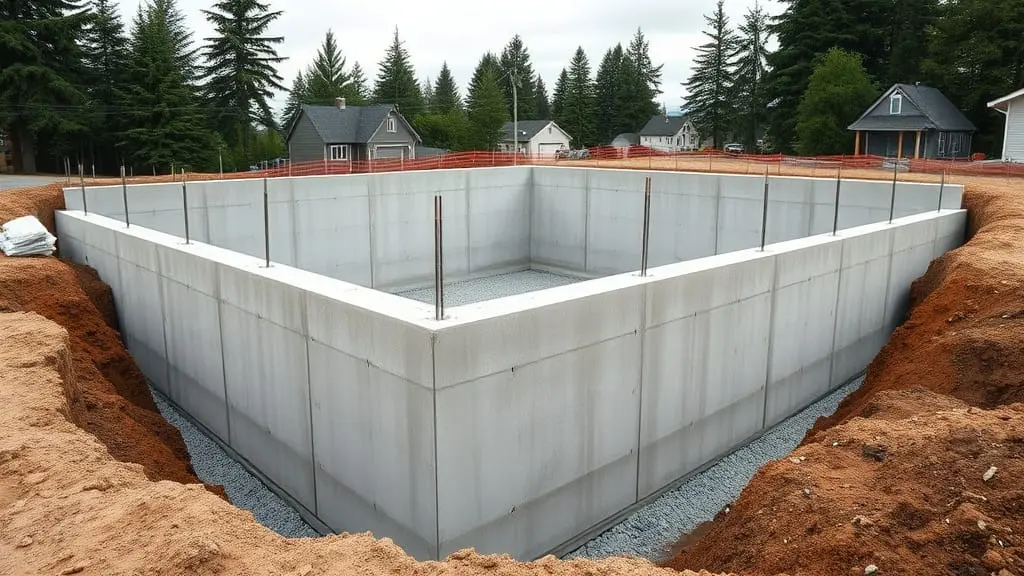
If you own a home in Bellingham, you already know that water is a constant companion. With 37 inches of annual rainfall, a wet season stretching from October through April, and glacial till soil that holds moisture like a sponge, basement water intrusion isn't a question of if — it's a question of when. For homeowners in neighborhoods like South Hill, Sehome, and the Lettered Streets, a damp or leaking basement can silently destroy thousands of dollars in property value while creating conditions for mold growth and structural deterioration.
As foundation repair and waterproofing specialists serving Whatcom County for over two decades, we've helped hundreds of Bellingham homeowners transform wet, unusable basements into dry, livable spaces. This guide covers everything you need to know about protecting your home's foundation from water damage in our unique Pacific Northwest climate.
Why Bellingham Basements Are Especially Vulnerable
Not all basements face equal water challenges, and Bellingham's specific combination of geological and climate factors creates a particularly aggressive environment for water intrusion. Understanding these factors is the first step toward an effective waterproofing strategy.
Glacial Till Soil and Hydrostatic Pressure
Most of Whatcom County sits atop glacial till — a dense, poorly draining mix of clay, sand, and gravel deposited during the last ice age. Unlike sandy soils that allow water to percolate away from foundations, glacial till traps water against basement walls, creating sustained hydrostatic pressure. This pressure can force water through microscopic pores in concrete, hairline cracks, and improperly sealed joints. Homes in Alabama Hill, Happy Valley, and parts of Ferndale sit on particularly dense till deposits, and we consistently see higher rates of water intrusion in these areas.
Marine Climate and Extended Wet Season
Bellingham's marine climate means six months of nearly continuous moisture from October through April. Unlike regions with intense but brief rainstorms, our steady, persistent rainfall keeps soil saturated for extended periods. This sustained saturation means your foundation is under constant hydrostatic pressure for half the year. Combine this with winter temperatures hovering between 35-45°F — just above freezing — and you get repeated freeze-thaw cycles that gradually open cracks and compromise waterproofing membranes.
High Water Table Areas
Several Bellingham neighborhoods sit near natural waterways with elevated water tables. Properties near Whatcom Creek in the Columbia and York neighborhoods, homes adjacent to Padden Creek in the Samish area, and lakefront properties in Sudden Valley all contend with water tables that can rise to within feet of basement floor level during peak wet season. In these locations, standard waterproofing measures are often insufficient, and active water management systems become essential.
Recognizing the Signs of Water Intrusion
Early detection of water problems can save you thousands in repair costs. Here are the warning signs every Bellingham homeowner should watch for, especially during the wet months from October through April:
- Visible water or puddles: Standing water on the basement floor, especially after heavy rain events
- Damp or wet walls: Moisture on interior foundation walls, particularly along the bottom third where hydrostatic pressure is greatest
- White mineral deposits (efflorescence): Powdery white residue indicating water migration through the concrete
- Musty odors: A persistent musty smell indicates elevated humidity and potential mold growth
- Peeling paint or bubbling drywall: Moisture pushing through walls causes paint to blister and drywall to degrade
- Cracks in foundation walls or floor: New or widening cracks indicate hydrostatic pressure is working against your foundation
- Mold or mildew growth: Dark spots on walls, particularly in corners and along the floor-wall joint
If you notice any of these signs, it's time to investigate waterproofing solutions before the damage compounds.
Interior Waterproofing Methods
Interior waterproofing manages water that has already entered the basement, redirecting it to a drainage system and removing it from the space. For many Bellingham homes, interior waterproofing is the most practical and cost-effective first line of defense.
Interior French Drain Systems
An interior French drain (also called a perimeter drain or drain tile system) is the workhorse of basement waterproofing in our region. The system involves cutting a channel along the interior perimeter of the basement floor, installing perforated pipe in a gravel bed, and routing all collected water to a sump pit. In Bellingham's climate, we typically recommend a full-perimeter system rather than a partial installation, given the sustained nature of our rainfall.
The process involves jackhammering a 12-18 inch trench along the foundation wall, installing 4-inch perforated PVC pipe surrounded by washed gravel, and covering the system with new concrete. A drainage board or dimple mat is also installed against the foundation wall to channel water that enters through the wall directly into the drain system. For a typical Bellingham basement of 800-1,200 square feet, a complete interior French drain installation runs $6,000-$12,000 depending on the size and complexity.
Sump Pump Installation
A sump pump is the heart of any interior waterproofing system. The pump sits in a sump pit (typically 18-24 inches in diameter and 24-30 inches deep) and automatically activates when water reaches a set level. In Bellingham's climate, we strongly recommend:
- Primary pump: A 1/3 to 1/2 HP submersible pump capable of handling 2,000-3,000 gallons per hour ($300-$600 for the unit)
- Battery backup pump: Essential for Bellingham, where winter storms frequently cause power outages. A battery backup pump ($400-$800) provides 8-12 hours of protection during outages
- Water-powered backup: For homes with municipal water, a water-powered backup pump provides unlimited runtime during outages without relying on batteries ($200-$400)
- Sump pump alarm: A simple float alarm ($20-$50) alerts you if water levels rise above the pump's activation point
We typically install discharge lines that route water at least 10 feet away from the foundation, downhill whenever possible. In neighborhoods like Edgemoor and Silver Beach where lot grading can be complex, we sometimes need to install longer discharge runs or connect to existing storm drainage systems.
Interior Sealants and Coatings
Interior sealants are an effective supplementary measure, though they should not be relied upon as a sole waterproofing strategy in Bellingham's climate. Crystalline waterproofing compounds ($2-$4 per square foot) penetrate concrete and form crystals within the pores. Hydraulic cement ($500-$1,500) seals active leaks at cracks and the wall-floor joint. Epoxy injection ($300-$600 per crack) creates a rigid seal for stable cracks, while polyurethane injection ($400-$800 per crack) provides a flexible seal that accommodates minor movement.
Vapor Barriers
A vapor barrier is a heavy-duty polyethylene sheet (typically 10-20 mil) installed on basement walls to block moisture migration. In Bellingham, vapor barriers are essential for any homeowner planning to finish their basement. We use reinforced 20-mil barriers with sealed seams, channeling moisture down to the perimeter drain system. For a standard basement, installation runs $2,000-$5,000 depending on wall area.
Exterior Waterproofing Methods
Exterior waterproofing addresses the problem at its source — the outside of the foundation wall. While more expensive and disruptive than interior methods, exterior waterproofing provides the most complete protection and is often necessary for severe water problems in our climate.
Exterior Foundation Membrane
The gold standard of waterproofing involves excavating down to the foundation footing, applying a waterproof membrane to the exterior wall, installing a drainage board, and backfilling with free-draining gravel. This is particularly effective for older homes in neighborhoods like Fairhaven, the Lettered Streets, and Sunnyland where original waterproofing (if any existed) has long since degraded.
The process is substantial: full excavation around the foundation perimeter, wall cleaning and repair, application of a rubberized asphalt or bentonite membrane, installation of a dimple board drainage mat, placement of a footing-level drain tile connected to the storm system or a daylight outlet, and backfilling with washed gravel topped with native soil. For a typical Bellingham home, exterior waterproofing costs $15,000-$30,000 or more depending on access, depth, and foundation length.
Exterior French Drain Systems
An exterior French drain installed at the footing level intercepts groundwater before it reaches the foundation. This is distinct from a shallow yard drain — a footing drain runs 6-8 feet deep along the foundation wall. In areas of Bellingham with high water tables, such as the Boulevard Park neighborhood and parts of Birchwood near Bellingham Bay, exterior footing drains are often the critical difference between a dry and wet basement. Cost: $8,000-$18,000 depending on depth and perimeter length.
Grading and Surface Drainage Improvements
Before investing in major waterproofing systems, ensure your surface drainage isn't working against you. Many water intrusion problems in Bellingham can be significantly reduced by:
- Regrading around the foundation: Ensure the ground slopes away from the house at a minimum of 1 inch per foot for the first 6 feet. Cost: $1,000-$3,000
- Extending downspouts: Route gutter downspouts at least 6 feet from the foundation via buried extensions. Cost: $200-$500 per downspout
- Installing surface drains: Catch basins and channel drains redirect surface water away from the foundation. Cost: $500-$2,000 per drain
- Window well covers and drains: Basement window wells are a common entry point for water. Proper covers and well drains prevent accumulation. Cost: $100-$400 per window
Choosing the Right Approach for Your Bellingham Home
The optimal waterproofing strategy depends on your specific situation. Here's our general guidance based on decades of experience throughout Whatcom County:
Start with surface drainage improvements if you're seeing minor dampness only during heavy rain events. Many Bellingham homes — particularly in Cordata and Barkley Village where construction is newer — simply need better grading and downspout management. Cost: $1,500-$5,000.
Install an interior French drain and sump pump if you're experiencing regular water intrusion, visible water on the floor, or if you want to finish your basement. This addresses 80-90% of basement water problems in our climate and is our most commonly recommended solution for homes in established neighborhoods. Cost: $8,000-$15,000.
Pursue exterior waterproofing if you have severe water intrusion, structural cracks allowing bulk water entry, or if you're already excavating for foundation repair. This is the premium solution and provides the most comprehensive protection. Cost: $15,000-$35,000.
Combine interior and exterior methods for the most challenging situations — homes near waterways, properties in high water table areas like Sudden Valley, or historic homes in Fairhaven with stone foundations. A combined system provides multiple layers of protection. Cost: $20,000-$45,000.
Permits and Regulations in Whatcom County
Waterproofing work in Bellingham and Whatcom County may require permits depending on the scope. Interior work typically doesn't require permits, but exterior excavation near property lines or connections to storm drainage systems often do. If your waterproofing project involves concrete resurfacing of basement floors or new slab installation, additional permits may be required. We handle all permitting as part of our waterproofing projects and ensure full compliance with City of Bellingham and Whatcom County codes.
Maintenance for Long-Term Performance
A waterproofing system is not a set-and-forget installation. To ensure continued performance in Bellingham's demanding climate:
- Test your sump pump quarterly: Pour water into the pit and confirm the pump activates and discharges properly
- Replace sump pump batteries annually: Battery backup systems lose capacity over time. Replace before each wet season
- Inspect discharge lines before October: Ensure lines are clear and outlet points are unobstructed
- Maintain gutters and downspouts: Clean twice annually — once in late fall after leaves drop and once in spring. Clogged gutters dump concentrated water against the foundation
- Monitor humidity levels: Keep basement humidity below 50% using a dehumidifier if needed. In Bellingham's climate, a dehumidifier running during the wet season is often necessary even with a good waterproofing system
- Address cracks promptly: New cracks should be evaluated and sealed before the next wet season. A small crack can become a major entry point within one winter
Protecting your basement from water intrusion is one of the most valuable investments you can make in your Bellingham home. A dry basement preserves your foundation's structural integrity, prevents mold and health hazards, and adds usable square footage. Addressing water intrusion early always costs less than dealing with the consequences of inaction.
Ready to get started? Contact us today for a free estimate — we serve all of Bellingham and Whatcom County.