
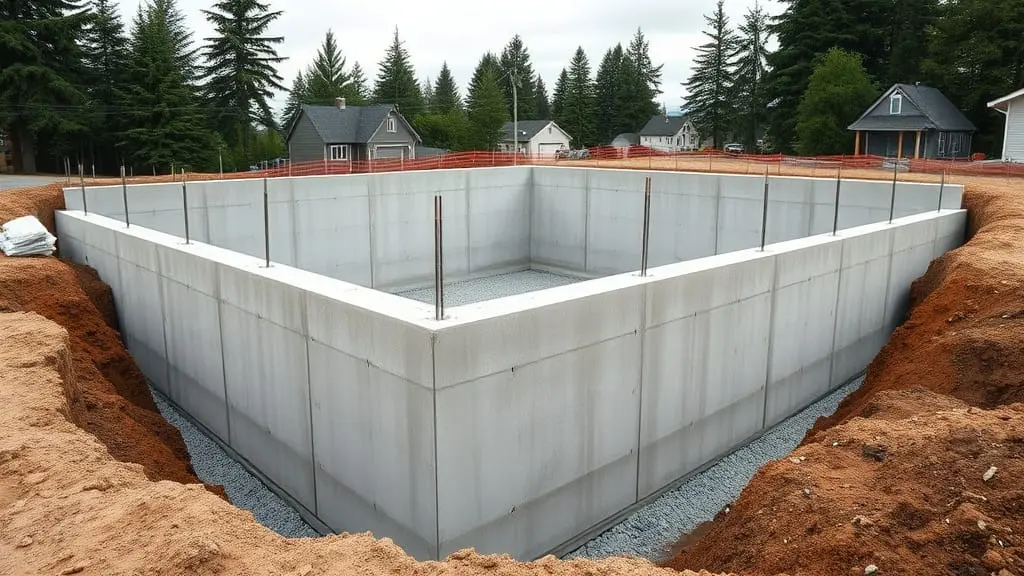
Foundation problems in Bellingham homes are more common than most homeowners realize. The combination of our region's glacial till soil, high annual rainfall, and vintage housing stock creates the perfect storm for foundation issues. Recognizing the warning signs early can mean the difference between a $3,000 repair and a $30,000 structural emergency.
As concrete contractors specializing in foundation repair services throughout Whatcom County, we've assessed hundreds of Bellingham homes and identified patterns that every local homeowner should understand. The foundation issues we see in Pacific Northwest homes are distinctly different from those in other regions, and our marine climate accelerates problems that might develop slowly elsewhere.
Why Bellingham Homes Are Particularly Vulnerable
Understanding why foundation problems occur more frequently here requires looking at three factors unique to our region: soil composition, construction era trends, and our distinctive climate.
Glacial Till Soil Throughout Whatcom County
Most of Bellingham sits on glacial till—a dense, poorly-draining mixture of clay, silt, sand, and gravel left by retreating glaciers. This soil type is common throughout Sehome, South Hill, Columbia, and the Lettered Streets neighborhoods. Unlike the sandy, well-draining soils found in many regions, glacial till creates two significant problems for foundations.
First, it retains water like a sponge. During our rainy season (typically October through April), the soil becomes saturated and heavy, creating lateral pressure against foundation walls. This hydrostatic pressure can cause basement walls to bow inward or crack. Second, glacial till is prone to differential settling—different parts of your foundation may settle at different rates, causing structural stress.
Properties near Bellingham Bay or along Whatcom Creek face additional challenges from high water tables. Homes in Fairhaven, the waterfront areas of Boulevard Park, and lower-elevation parts of Sehome often have groundwater within just feet of foundation depth, making waterproofing and drainage critical.
Vintage Construction in Established Neighborhoods
Bellingham experienced major residential construction booms in three periods: the 1920s-1930s (pre-Depression), 1946-1965 (post-war expansion), and 1985-2005 (modern development). The middle period created many of today's foundation problems.
Post-war homes in South Hill, Sunnyland, and parts of Columbia were built quickly to meet housing demand. Foundation techniques of that era—shallow footings, minimal reinforcement, inadequate waterproofing—simply weren't designed for 60+ years of Bellingham weather. We regularly encounter homes from the 1950s-60s with foundations showing their age.
The charming pre-war homes in the Lettered Streets, Eldridge, and York neighborhoods often have unreinforced concrete or even stone foundations that are approaching 100 years old. While many have held up remarkably well, they weren't built to modern seismic standards and often lack adequate drainage systems.
Impact of Bellingham's 37 Inches of Annual Rainfall
Our marine climate creates unique stresses. Unlike regions with distinct wet and dry seasons, Bellingham's foundations remain damp for 6-8 months annually. This constant moisture creates several problems:
- Hydrostatic pressure buildup: Water-saturated soil pushes against foundation walls with tremendous force
- Frost heaving: While we rarely experience deep freezes, periodic cold snaps cause the top layer of saturated soil to freeze and expand, lifting foundations slightly
- Erosion of support soil: Water flowing around and under foundations can gradually wash away supporting soil, creating voids
- Accelerated concrete degradation: Constant moisture cycles cause concrete to deteriorate faster, particularly in older foundations without proper waterproofing
Warning Signs Specific to Pacific Northwest Homes
While some foundation problems are universal, several warning signs are particularly relevant to Bellingham properties. Here's what to watch for, listed from subtle early indicators to obvious structural problems.
Exterior Warning Signs
Diagonal cracks in exterior foundation walls: Step-like cracks that follow the mortar joints in concrete block foundations are early indicators of settling. Vertical cracks are often less concerning—they may be shrinkage cracks from when the concrete cured. Horizontal cracks or cracks wider than a quarter-inch at any point require immediate professional assessment.
Separation between foundation and siding: If you can see a growing gap where your siding meets the foundation, particularly on one side of the house, differential settling is occurring. This is common on hillside properties in South Hill and the Geneva neighborhood.
Tilting or leaning chimneys: Chimneys, especially exterior brick chimneys common in older Bellingham homes, often rest on separate footings from the main house. If your chimney is pulling away from the house or leaning, its footing is likely failing.
Soggy areas near foundation: Standing water or perpetually damp soil within 10 feet of your foundation indicates drainage problems that will eventually cause foundation issues if not addressed. This is especially problematic in the relatively flat areas of Cordata and Barkley Village where natural drainage is limited.
Cracked or sunken concrete slabs: If your patio, walkway, or driveway is sinking toward the house rather than sloping away, water is being directed at your foundation. Our concrete driveway repair team often finds that addressing these drainage issues prevents future foundation problems.
Interior Warning Signs
Doors that stick or won't latch: When your home's frame shifts due to foundation movement, door openings become parallelograms instead of rectangles. You'll notice this first with interior doors, especially those far from the foundation walls. If multiple doors throughout the house suddenly become difficult to close, foundation movement is the likely cause.
Cracks above doorways and windows: Diagonal cracks extending from the corners of door or window frames indicate the house is racking—twisting due to uneven foundation support. These cracks typically appear on interior drywall first before becoming visible on exterior stucco or siding.
Separation between walls and ceiling or floor: Gaps appearing where walls meet the ceiling or floor indicate structural movement. This is particularly common in two-story Bellingham homes where the weight distribution stresses a failing foundation.
Sloping or sagging floors: Set a marble or ball bearing on your floor—if it consistently rolls toward one area, you have significant foundation settlement. In multi-level homes built on Bellingham's hillsides, some slope is normal during initial settlement, but progressive or sudden changes indicate active problems.
Cracks in tile or hardwood floor separation: Flooring materials respond to foundation movement. Cracks in ceramic tile (especially if they follow a pattern rather than random breaks) or hardwood boards separating from each other signal that the subfloor—and foundation beneath it—is shifting.
Basement and Crawlspace Warning Signs
Water infiltration or dampness: This is the most common issue we see in Bellingham basements. Water stains on walls, efflorescence (white mineral deposits), or actual standing water indicates your foundation waterproofing is failing or was inadequate from the start. The constant damp of our climate means this problem only worsens over time.
Bowing or bulging basement walls: Hydrostatic pressure from our saturated glacial till soil can cause basement walls to bow inward. This is a serious structural issue requiring immediate attention. We see this most frequently in homes from the 1950s-70s with concrete block foundation walls that lack adequate reinforcement.
Musty odor or mold growth: While not a direct foundation failure, persistent dampness that enables mold indicates water is penetrating your foundation. Bellingham's climate provides plenty of moisture—if your foundation allows water through, mold will follow.
Cracks in basement floor: Heaving or settling of the slab is often an early warning that the foundation walls will follow. This is particularly common in homes on expansive clay soils found in parts of Columbia and the north end neighborhoods.
What Hydrostatic Pressure Does to Bellingham Foundations
To understand why foundation problems develop, you need to understand hydrostatic pressure—the force exerted by water-saturated soil. Bellingham's combination of heavy rainfall and poorly-draining glacial till creates textbook conditions for hydrostatic pressure problems.
During our wet season, the soil around your foundation can hold several times its dry weight in water. This creates outward and upward pressure. An 8-foot tall foundation wall might experience 1,000+ pounds per square foot of lateral pressure when the surrounding soil is fully saturated. Most older foundation walls in Bellingham weren't designed for this constant stress.
This pressure manifests in several ways: basement walls bowing inward (we've measured deflections of 2-3 inches in severe cases), cracks forming at stress points (typically mid-wall or at corners), and water forcing its way through the concrete itself via capillary action. The freeze-thaw cycles of our occasional winter cold snaps make this worse—water penetrates cracks, freezes, expands, and makes the cracks larger.
Proper foundation waterproofing and drainage systems are designed to manage this pressure by directing water away before it accumulates. Unfortunately, many Bellingham homes built before 1990 lack adequate exterior drainage, making retrofitting a frequent necessity.
Common Foundation Types in Whatcom County and Their Failure Modes
Understanding what type of foundation your home has helps identify likely problems and appropriate solutions.
Poured Concrete (1960s-Present)
Most modern Bellingham homes have poured concrete foundations—solid walls of reinforced concrete. These are generally the most durable option, but they're not immune to problems. Common issues include horizontal cracks from hydrostatic pressure, settlement cracks at corners, and cold joints (weak spots where one concrete pour meets another) that allow water infiltration.
Concrete Block (1950s-1980s)
Concrete masonry unit (CMU) foundations were standard for decades and remain common in South Hill, Sunnyland, and Columbia neighborhoods. The individual blocks are mortared together and ideally filled with concrete and rebar. Problems develop when: blocks weren't properly filled or reinforced, mortar joints deteriorate from moisture exposure, or hydrostatic pressure causes the wall to bow between vertical reinforcement points.
We've found that many concrete block foundations in Bellingham were built without adequate reinforcement or waterproofing. Block foundations require more maintenance than poured concrete and are more vulnerable to our climate.
Stone or Brick (Pre-1940)
Older homes in the Lettered Streets, Eldridge, and Fairhaven often have stone or brick foundations. These were built using local stone or brick with mortar, sometimes directly on soil without modern footings. While they've often lasted 80-100+ years, they have limitations: no reinforcement (making them vulnerable to seismic activity), mortar that deteriorates over time, and often no waterproofing beyond their mass.
These foundations require specialized repair approaches. Our foundation specialists work with structural engineers on historic Bellingham homes to preserve their character while improving structural integrity.
Pier and Beam (Various Eras)
Some Bellingham homes, particularly in areas with challenging terrain or older construction, use pier and beam foundations—concrete piers supporting wooden beams that carry the house. Problems include: deterioration of wooden components in our damp climate, settling or tilting of individual piers, and inadequate support spacing by modern standards.
When to Call a Professional vs. DIY Assessment
As homeowners, you can and should monitor your foundation regularly. We recommend an annual foundation walk-around every spring after our wet season ends. Document any cracks with photos, measure them, and note their locations. This creates a record of whether problems are active (growing) or stable.
You can monitor yourself:
- Hairline cracks less than 1/8 inch wide
- Vertical cracks in poured concrete (often shrinkage cracks)
- Minor settling of exterior slabs away from the foundation
- Occasional water seepage during extreme rain events
Call a professional immediately if you observe:
- Any horizontal cracks in foundation walls
- Cracks wider than 1/4 inch or cracks that are growing
- Visible bowing or bulging of basement walls (even slight)
- Doors and windows throughout the house suddenly sticking
- Sloping floors or separation between walls and floors/ceilings
- Persistent water infiltration in basement or crawlspace
- Any structural cracking of foundation accompanied by movement
Foundation problems are progressive—they don't improve on their own, and delaying repair allows minor issues to become major structural problems. Early intervention is almost always more cost-effective than waiting.
Typical Foundation Repair Costs in the Bellingham Market
Repair costs vary dramatically based on the problem's severity and your home's accessibility. Hillside homes in South Hill or properties with limited access in the Lettered Streets cost more to repair than homes on flat, accessible lots.
Minor crack repair and sealing: $500-$2,000. Suitable for stable cracks under 1/4 inch that need sealing to prevent water infiltration.
Basement waterproofing (interior): $3,000-$8,000. Interior drain tile system, sump pump installation, and wall sealant application. This addresses water infiltration without excavating.
Exterior waterproofing and drainage: $8,000-$15,000. Excavation around foundation, application of waterproof membrane, installation of drainage system, and backfill. More effective than interior systems but requires access and landscape disturbance.
Wall stabilization and reinforcement: $4,000-$12,000. Carbon fiber straps or steel I-beams installed to prevent further bowing of basement walls. Price varies with wall length and severity of deflection.
Underpinning and lifting: $15,000-$40,000+. For severe settlement, extending foundation depth or installing piers to lift and stabilize the structure. This is major work requiring structural engineering and significant excavation.
Full foundation replacement: $40,000-$100,000+. Rarely necessary, but older homes with failed stone foundations or extensive damage may require new foundations. This involves temporarily supporting the house while rebuilding the foundation beneath it.
Most foundation repairs in Bellingham fall in the $5,000-$15,000 range for addressing common issues like crack repair with drainage improvements or basement waterproofing. The key is catching problems early—a $3,000 drainage system installed when you first notice dampness prevents the $15,000 foundation repair needed after years of water damage.
Bellingham Building Code Requirements for Foundation Work
The City of Bellingham requires permits for structural foundation work. This includes: underpinning, wall reinforcement, excavation affecting foundation support, and significant crack repairs requiring structural modifications. Simple crack sealing typically doesn't require permits, but it's best to verify with the building department.
Permitted work requires: structural engineering stamps for significant repairs, inspections at various stages, and compliance with current seismic standards. While permits add some cost and time, they ensure work is done properly and provide documentation that helps with home resale.
Our team handles all permitting and works with structural engineers when required. We're familiar with City of Bellingham building department processes and inspectors, making the permitting process smooth for our clients.
Case Study: South Hill Home Foundation Repair
To illustrate the typical progression and repair of foundation problems, here's a recent project:
The homeowners of a 1963 rambler in South Hill noticed doors sticking and small cracks above windows. During our assessment, we found: a horizontal crack approximately 15 feet long in the rear basement wall, measurable inward deflection of about 1.5 inches at the crack's center, water staining indicating periodic infiltration, and inadequate drainage with downspouts emptying within 3 feet of the foundation.
The cause was clear: decades of hydrostatic pressure from inadequate drainage had stressed the unreinforced concrete block wall to the point of failure. The solution required: installation of carbon fiber reinforcement straps to stabilize the wall and prevent further bowing, crack repair and sealing, exterior regrading and installation of drainage system to direct water away, and extension of all downspouts with buried drain lines.
Total cost: $11,500. Timeline: two weeks including permitting and inspections. Result: wall stabilized with no further movement after three years, basement remains dry even during heavy winter rains, and home value preserved (foundation problems discovered during sale inspection can cost tens of thousands in negotiated price reductions).
The homeowners noted they'd first noticed minor cracks five years earlier but assumed they were cosmetic. The repair cost would have been approximately $4,000 if addressed then—waiting multiplied the cost nearly threefold.
Preventive Measures for Bellingham Homeowners
While some foundation issues are unavoidable consequences of age and our climate, you can take steps to minimize risk:
- Maintain proper drainage: Keep gutters clean, ensure downspouts extend at least 6 feet from foundation, grade soil to slope away from house at minimum 6 inches over 10 feet
- Control water near foundation: Fix sprinkler systems that spray against house, create swales to direct surface water away, consider French drains if property has natural water flow toward house
- Monitor seasonally: Check foundation in spring after wet season for new cracks or changes, photograph and measure any cracks for future comparison
- Manage vegetation: Keep trees and large shrubs at distance equal to their mature height from foundation, trim roots that threaten foundation or drainage systems
- Maintain even moisture: Paradoxically, in our wet climate you want to prevent extreme drying during summer dry spells, as clay soils shrinking away from foundation can cause settlement
For older homes particularly, consider a professional foundation inspection every 3-5 years. The $300-500 cost of a thorough assessment can identify developing problems before they become expensive emergencies.
Getting Professional Help
If you've noticed any of the warning signs described here, don't wait for the problem to worsen. Our foundation repair specialists offer free assessments throughout Whatcom County. We'll evaluate your foundation's condition, identify the root cause of any problems, and provide a detailed repair plan with transparent pricing.
We've worked on foundations throughout every Bellingham neighborhood, from historic homes in Fairhaven to modern constructions in Cordata, and understand the specific challenges our local soil and climate present. Foundation problems are stressful, but with early detection and professional repair, your home's structural integrity can be preserved for generations to come.
Ready to get started? Contact us today for a free estimate — we serve all of Bellingham and Whatcom County.