
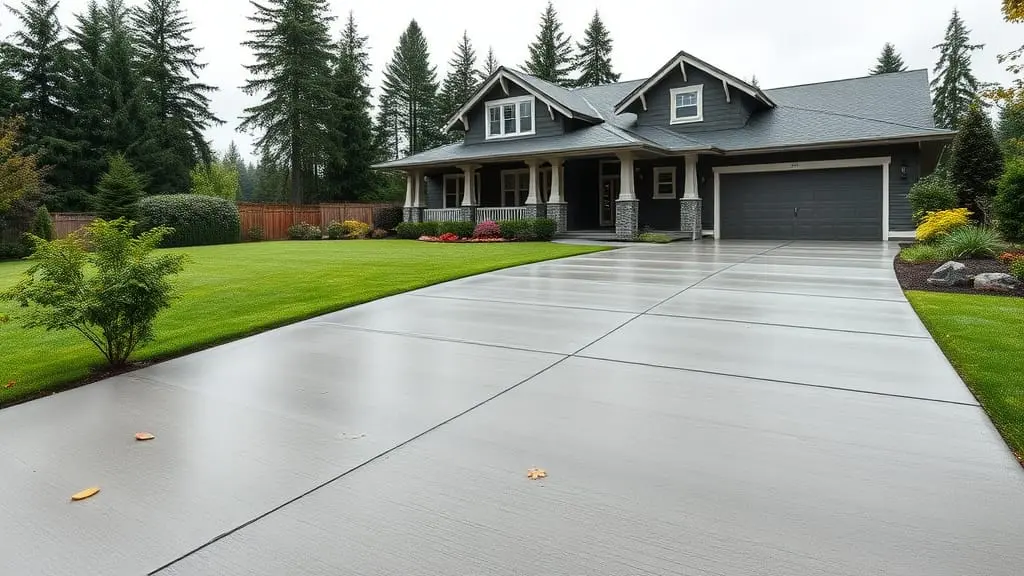
Hiring a concrete contractor is one of the most consequential decisions a homeowner can make. A well-poured driveway, patio, or foundation will serve your property for 25-30 years. A poorly executed project can fail within 3-5 years, costing you thousands in repairs or full replacement. In Whatcom County — where freeze-thaw cycles, 37 inches of annual rainfall, and glacial till soil test every pour — the gap between a skilled contractor and a subpar one shows up fast.
Whether you're planning a new driveway in Cordata, a decorative patio in Edgemoor, or a foundation repair in Fairhaven, asking the right questions before signing a contract protects your investment and your property. Here are the essential questions every Bellingham homeowner should ask — and the answers you should expect from a reputable contractor.
Licensing, Bonding, and Insurance
Washington State requires all contractors performing work over $500 to hold an active license through the Department of Labor and Industries (L&I). This isn't optional — it's the law — and it's the single most important thing to verify before hiring anyone.
Questions to Ask
- "What is your Washington State contractor license number?" Every licensed contractor has a unique UBI number registered with L&I. You can verify it instantly at the L&I contractor verification website. The license should show as active with no outstanding violations.
- "Are you bonded and insured?" Washington requires contractors to carry a surety bond (minimum $12,000 for general contractors) that protects you if the contractor fails to complete the work or violates the contract. Verify the bond is current, not expired.
- "Do you carry general liability and workers' compensation insurance?" General liability insurance protects your property if the contractor damages it during work. Workers' compensation covers injuries to their crew on your property. Without it, you could be held liable if a worker is injured on your job site.
Red Flags
- The contractor hesitates or refuses to provide a license number
- They offer a significant discount for paying cash with no contract
- The license check reveals complaints, violations, or an expired bond
- They claim to be "exempt" from licensing requirements
We've seen homeowners in Lynden and Ferndale burned by unlicensed operators who did substandard work and then disappeared. With no license and no bond, these homeowners had virtually no recourse. The L&I verification takes less than two minutes and can save you tens of thousands of dollars.
Experience and Local Expertise
Concrete work in Bellingham is fundamentally different from concrete work in Phoenix or Atlanta. Our marine climate, glacial till soil composition, and local building codes create requirements that out-of-area contractors often don't understand. A contractor who's been pouring concrete in the Southwest for 20 years may have zero experience with air-entrained mixes, freeze-thaw resistance, or Bellingham's impervious surface regulations.
Questions to Ask
- "How long have you been pouring concrete in Whatcom County specifically?" Look for at least 3-5 years of local experience. Bellingham's climate and codes have specific requirements that take time to master.
- "Can you show me completed projects in my area?" A contractor who's worked in your neighborhood understands the specific soil conditions, slope challenges, and permitting requirements. Ask to see work in neighborhoods like Sehome, South Hill, or the Lettered Streets — areas with distinct terrain challenges.
- "What concrete mix design do you recommend for my project, and why?" A knowledgeable contractor should immediately mention air-entrainment for exterior concrete in Bellingham's climate. If they don't bring it up, that's concerning. They should explain PSI ratings, slump specifications, and any additives specific to your project needs.
- "How do you handle pours during Bellingham's wet season?" Between October and April, rain is constant. An experienced local contractor will explain their rain protection strategy, temperature monitoring, and cold-weather curing protocols rather than simply saying they don't pour in winter.
Why Local Experience Matters in the PNW
We've repaired work from out-of-area contractors who didn't understand Bellingham's unique demands. Common failures we see include:
- Non-air-entrained mixes that scale and spall after the first hard freeze
- Insufficient subbase depth on glacial till soil, leading to settling within 2-3 years
- Inadequate drainage planning for 37 inches of annual rainfall
- Ignorance of Bellingham's impervious surface limits, resulting in permit violations the homeowner must resolve
- Pouring during conditions too cold for proper curing without using protective measures
Portfolio, References, and Reviews
Any contractor worth hiring should be proud to show you their work. A strong portfolio demonstrates consistency, skill range, and experience with projects similar to yours.
Questions to Ask
- "Can I see photos of projects similar to mine that you've completed in the last two years?" Recent work is more relevant than projects from a decade ago. Look for clear before-and-after photos that show the full scope of work.
- "Can you provide three references from recent Whatcom County projects?" Call these references. Ask about communication, cleanliness, timeline adherence, and whether they'd hire the contractor again. Ask specifically if any issues arose after the project and how the contractor handled them.
- "Do you have online reviews I can read?" Check Google Business Profile, Yelp, and the Better Business Bureau. Look for patterns in reviews — a single negative review happens to everyone, but repeated complaints about the same issue (missed timelines, poor communication, sloppy cleanup) indicate systemic problems.
- "Have you completed any projects requiring specialized finishes or techniques?" If you want stamped concrete or exposed aggregate, verify they have specific experience with that technique. Decorative concrete requires skills that not every contractor possesses.
Written Estimates and Contract Essentials
A verbal quote is worthless if a dispute arises. Every concrete project should begin with a detailed, written estimate that becomes part of a signed contract. This protects both you and the contractor.
What the Estimate Should Include
- Itemized costs: Materials (concrete mix, reinforcement, subbase), labor, equipment, forming, finishing, and sealing should each be listed separately
- Project scope: Exact dimensions, thickness, finish type, reinforcement method, and any decorative elements
- Site preparation details: Who handles excavation, grading, and disposal of removed materials? What's the cost?
- Timeline: Projected start date, pour date, and completion date, with provisions for weather delays
- Permit responsibilities: Who pulls the permits and pays the fees? (The contractor should handle this)
- Payment schedule: Typical structure is 10-30% deposit, progress payment at forming completion, and final payment after cure. Never pay 100% upfront.
- Warranty terms: What does the contractor guarantee, for how long, and what does the warranty cover?
Contract Red Flags
- Demanding full payment upfront: This is the single biggest red flag in the construction industry. A legitimate contractor never requires full payment before work begins.
- Vague scope descriptions: "Pour concrete patio, approximately 300 sq ft" is too vague. The contract should specify exact dimensions, thickness, mix design, finish, and reinforcement.
- No warranty language: Every reputable contractor stands behind their work with a written warranty — typically 1-3 years on workmanship.
- Pressure to sign immediately: "This price is only good today" is a high-pressure sales tactic, not a legitimate business practice.
- No mention of permits: If your project requires a permit and the contractor doesn't mention it, they may be planning to skip it — leaving you exposed to code violations and potential fines.
Project-Specific Technical Questions
Beyond business credentials, ask technical questions that reveal whether the contractor truly understands concrete work in Bellingham's environment. The answers will quickly separate experienced professionals from general handymen who occasionally pour concrete.
For Driveways
- "What PSI concrete do you recommend for a residential driveway in Bellingham?" (Answer should be 4,000 PSI minimum with air entrainment)
- "What subbase depth and material will you use?" (Answer should be 4-6 inches of compacted crushed rock)
- "How will you address drainage on a sloped lot?" (Critical for properties on Alabama Hill or South Hill)
For Patios and Outdoor Spaces
- "How do you prevent water from pooling against my foundation?" (Proper slope away from the structure is essential)
- "What sealer do you recommend, and how often should it be reapplied?" (Every 2-3 years in Bellingham's wet climate)
- "How do you handle expansion joints between new concrete and existing structures?"
For Foundation Work
- "Will you conduct or coordinate a soil test?" (Important on Bellingham's variable glacial till)
- "How do you manage waterproofing for below-grade foundation walls?" (Critical with our rainfall)
- "What is your approach to existing crack repair vs. structural reinforcement?"
Communication, Timeline, and Cleanup Expectations
The quality of the finished concrete matters most, but the experience of working with a contractor matters too. Projects that run long, create neighborhood disturbances, or leave a mess create stress that no discount compensates for.
Questions to Ask
- "Who is my primary point of contact during the project?" Will you communicate with the business owner, a project manager, or the crew foreman? Establish this upfront.
- "How do you handle weather delays?" In Bellingham, weather delays are inevitable between October and April. The contractor should have a clear policy for rescheduling and should not pour concrete in heavy rain or when temperatures will drop below 35°F without proper cold-weather precautions.
- "What does your cleanup process look like?" Concrete work generates debris — broken concrete, forming lumber, excess rebar, packaging. The contractor should remove all materials and leave your property clean. Ask whether a dumpster will be on-site and how long it will remain.
- "How do you protect existing landscaping, driveways, and structures?" Concrete trucks are heavy. Mixer chutes spray. Ask how the crew protects adjacent surfaces, gardens, and your neighbor's property.
- "What is the expected curing timeline before I can use the surface?" A knowledgeable contractor will explain the 7-day light use and 28-day full cure timeline, adjusted for Bellingham's typical temperature range of 35-45°F in cooler months.
Warranty and Post-Project Support
Concrete is a long-term investment, and understanding what happens after the crew leaves is just as important as the installation itself.
Questions to Ask
- "What does your workmanship warranty cover, and for how long?" Most reputable contractors offer 1-3 year workmanship warranties covering cracking beyond normal control joint behavior, settling, and surface defects.
- "Do you offer maintenance services after the initial installation?" Sealing, crack repair, and surface cleaning extend concrete life dramatically in Bellingham's climate. A contractor who offers ongoing maintenance demonstrates long-term commitment.
- "What's the process if I notice a problem after the project is complete?" The answer should be straightforward: call us, we'll come look at it, and we'll make it right if it's a workmanship issue.
The Bottom Line: Hire Carefully, Build Once
The contractor you choose determines whether your concrete investment lasts 5 years or 30 years. In Whatcom County's demanding climate — with freeze-thaw cycles testing every pour, 37 inches of rain challenging every drainage plan, and glacial till soil shifting beneath every slab — experience and quality aren't luxuries. They're necessities.
Take the time to verify licenses, check references, compare written estimates line by line, and ask the technical questions that separate experienced professionals from underqualified operators. The 2-3 hours you invest in vetting contractors can save you tens of thousands of dollars in premature repairs, code violations, and project failures. Homeowners across Bellingham, Ferndale, Lynden, and Blaine who've done their due diligence consistently report better outcomes, fewer surprises, and concrete that performs year after year in our Pacific Northwest climate.
Ready to get started? Contact us today for a free estimate — we serve all of Bellingham and Whatcom County.