
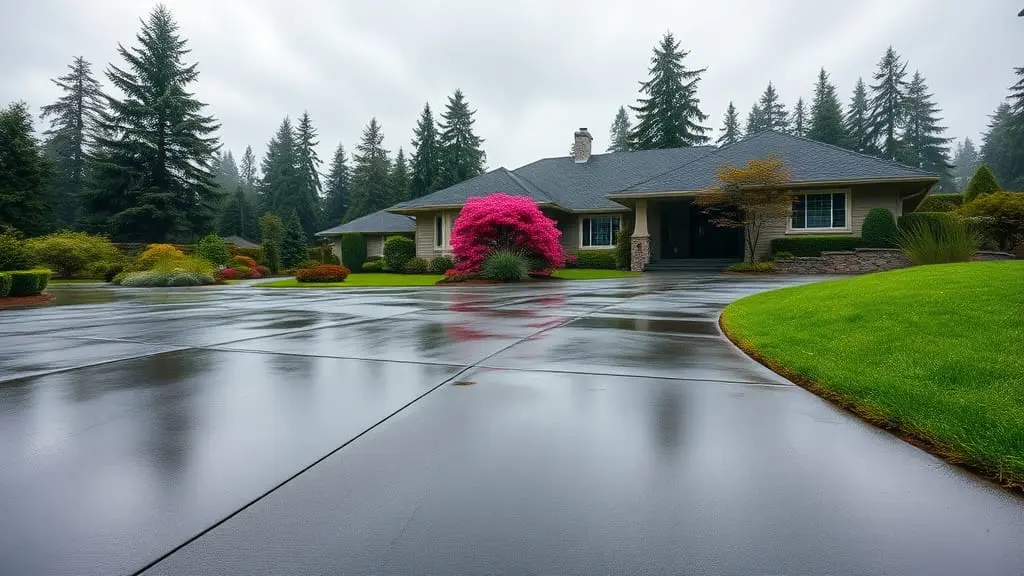
If you own concrete surfaces in Bellingham, you are going to need to power wash them. It is not a question of if but when and how often. Our marine climate, with 37 inches of annual rainfall spread across a persistent wet season from October through April, creates ideal conditions for moss, algae, lichen, and general grime to accumulate on every horizontal concrete surface. A driveway in Cordata that was pristine in June will have a green tinge by October. A patio in Sehome tucked under mature cedars can develop a thick moss carpet in a single year.
Power washing is the most effective way to restore concrete to its original appearance. But done incorrectly, it can cause permanent surface damage, etch patterns into the concrete, and even create safety hazards. As concrete maintenance professionals serving Whatcom County, we power wash hundreds of driveways, patios, sidewalks, and pool decks every year. Here is what we have learned about doing it right in our specific climate.
Why Bellingham Concrete Gets So Dirty
Before discussing how to clean concrete, it helps to understand what you are cleaning and why it accumulates so aggressively here.
Moss and Algae: The Primary Offenders
Green moss (Bryophyta) and algae thrive in Bellingham's cool, moist conditions. They need three things to colonize concrete: moisture, shade, and a textured surface to grip. Our climate provides abundant moisture for eight months of the year. Mature tree canopy in neighborhoods like the Lettered Streets, Samish, Sehome, and Happy Valley provides shade. And concrete's naturally rough texture, especially broom-finished driveways and walkways, provides the perfect substrate.
Moss is more than a cosmetic problem. Its rhizoids (root-like structures) physically penetrate concrete pores, and as moss holds moisture against the surface it accelerates freeze-thaw damage during our winter months. Algae creates a dangerously slippery film on walkways and steps, a genuine safety hazard during Bellingham's rainy season. Properties in Fairhaven's hillier sections and the sloped walkways of South Hill become treacherous when algae-covered and wet.
Other Contaminants Common in Whatcom County
- Tannin stains: Decomposing leaves from Big leaf maples, alders, and deciduous trees leave dark brown tannin stains on concrete. These are especially prevalent in York, Columbia, and Geneva during fall.
- Rust stains: From metal furniture, planter pots, fertilizer granules, and irrigation sprinkler heads. Common on patios throughout Bellingham.
- Oil and automotive fluids: Driveway stains from vehicle leaks. Older vehicles parked on driveways in Sunnyland and Birchwood are frequent culprits.
- Efflorescence: White, powdery mineral deposits that form when moisture migrates through concrete and evaporates on the surface, leaving dissolved salts behind. Very common on retaining walls and foundation walls in our damp climate.
- Mildew and black mold: Dark staining on north-facing surfaces and in areas with poor air circulation. Common on retaining walls and shaded patio surfaces.
PSI Recommendations: Getting the Pressure Right
Pressure is measured in pounds per square inch (PSI). Using too little pressure wastes time and water without removing embedded contaminants. Using too much pressure damages the concrete surface permanently. The right pressure depends on the concrete type, its age, and its condition.
Residential Concrete Surfaces
- Standard broom-finished concrete (driveways, sidewalks, garage floors): 3,000-3,500 PSI with a 25-degree (green) nozzle tip at 6-8 inches from the surface. This provides enough force to remove moss, algae, and embedded dirt without etching the surface.
- Stamped or decorative concrete: 2,000-2,500 PSI maximum with a 40-degree (white) nozzle tip at 8-12 inches. Higher pressure or a narrower nozzle angle can damage the texture and color of stamped concrete finishes. We see homeowners in Edgemoor and Fairhaven permanently scar their decorative patios by using too aggressive a pressure setting.
- Exposed aggregate concrete: 2,500-3,000 PSI with a 25-degree tip. The exposed stones are durable but the cement paste between them is vulnerable to erosion at higher pressures.
- Older or deteriorating concrete: 2,000-2,500 PSI maximum. Concrete that is already scaling, spalling, or showing aggregate exposure will lose material rapidly under high pressure. On aging surfaces, gentler pressure combined with chemical cleaning agents is more effective and less destructive.
- Concrete pool decks: 2,500-3,000 PSI. Pool deck surfaces are typically finished with a textured coating that can be damaged by excessive pressure.
Surface Cleaner vs. Wand
For flat surfaces like driveways and patios, a surface cleaner attachment (the spinning disc with two or more nozzles underneath) is far superior to a handheld wand. Surface cleaners provide even, consistent pressure across a 12-15 inch swath, eliminating the striping and etching patterns that a wand creates. The swirl marks left by wand washing are one of the most common complaints we hear from Bellingham homeowners who attempted DIY power washing.
A quality surface cleaner attachment costs $150-$300 and is worth every penny if you plan to wash your own concrete. Without one, achieving a uniform finish requires significant experience and technique.
Moss and Algae Removal: The Complete Process
Simply blasting moss with a pressure washer removes the visible growth but leaves behind spores and rhizoids embedded in the concrete pores. The moss returns within weeks. Effective long-term removal requires a chemical treatment step.
Pre-Treatment Protocol
- Scrape heavy moss deposits: Use a flat-blade shovel or stiff push broom to remove thick moss mats. This prevents clogging the pressure washer and ensures the chemical treatment reaches the concrete surface.
- Apply moss killer: We use a sodium hypochlorite (bleach) solution at 10-12% concentration, applied with a low-pressure sprayer. Allow 15-20 minutes of dwell time for the chemical to kill moss and algae to the root level. For environmentally sensitive areas near Silver Beach on Lake Whatcom or near Whatcom Creek, we use oxygen bleach (sodium percarbonate) as a non-toxic alternative.
- Rinse and pressure wash: After the dwell time, rinse the surface with low pressure, then follow with full-pressure washing to remove all dead organic material.
Post-Wash Prevention
After cleaning, applying a moss prevention treatment extends the time before regrowth. Zinc sulfate granules applied along roof ridgelines wash down with rain and inhibit moss growth on surfaces below. For horizontal concrete surfaces, a concrete sealer applied after cleaning fills the pores that moss rhizoids use to anchor, significantly slowing recolonization.
In heavily shaded areas common throughout Sehome and the Lettered Streets, even treated surfaces will eventually see moss return. Plan for annual or biennial cleaning as part of your regular property maintenance schedule.
Surface Damage Risks and How to Avoid Them
Improper power washing causes damage that ranges from cosmetic to structural. Here are the most common mistakes and their consequences.
Etching and Striping
Holding a narrow-angle nozzle (0-degree or 15-degree) too close to the surface or moving it too slowly creates visible etch lines in the concrete. These lines are permanent. The pressure physically removes cement paste from the surface, exposing aggregate and creating a rough, uneven texture. We have been called to assess driveways in Cordata and Barkley Village where DIY etching damage was so severe that the entire surface needed resurfacing to restore a uniform appearance.
Joint and Edge Damage
Directing high pressure into control joints, expansion joints, and slab edges erodes the concrete and widens the joint. This allows more water infiltration, accelerating freeze-thaw damage. We see this frequently on sidewalks throughout Bellingham where homeowners blast the moss out of joints with a zero-degree nozzle, unknowingly creating channels that funnel water into the slab base.
Sealer Removal
If your concrete has been previously sealed, high-pressure washing can strip the sealer unevenly, creating blotchy patches where water absorbs at different rates. If you know your concrete is sealed, test an inconspicuous area first. If the sealer strips, you will need to remove it entirely and reapply after cleaning.
Driving Contaminants Deeper
Oil stains, rust, and certain chemical contaminants cannot be removed with water pressure alone. Attempting to blast them out with higher pressure often drives the stain deeper into the concrete. These stains require chemical treatment with appropriate degreasers or rust removers before pressure washing.
Frequency: How Often Should Bellingham Homeowners Power Wash
The answer depends on your property's specific conditions. Here are our recommendations based on years of local experience:
- Full sun exposure (south-facing, no tree canopy): Every 2-3 years. Properties in open areas of Cordata, Barkley Village, and newer Ferndale subdivisions often need less frequent washing.
- Partial shade: Annually or every 18 months. Most properties in Bellingham fall into this category.
- Heavy shade (mature tree canopy, north-facing): Annually, sometimes twice per year for walkways and steps where algae creates a slip hazard. Common in Sehome, the Lettered Streets, Samish, Happy Valley, and portions of South Hill.
- Driveways with vehicle traffic: The tire traffic helps keep the driving surface cleaner, but edges and parking pads accumulate growth. Annually is typical.
- Commercial properties: Quarterly to semi-annually, depending on foot traffic and tenant expectations.
Best Time of Year for Power Washing in Bellingham
Late spring (May-June) is ideal. The winter moss and algae growth is at its peak visibility, the weather is warming enough for effective cleaning, and you have the full dry season ahead for the concrete to remain clean. Fall washing (September-October) is a secondary option but the concrete will face immediate recolonization during the wet season.
Environmentally Safe Cleaning Solutions
Bellingham homeowners are rightfully conscious about what washes off their concrete and into the stormwater system. Whatcom County's salmon-bearing streams and the Lake Whatcom watershed make chemical runoff a genuine environmental concern.
- Oxygen bleach (sodium percarbonate): Breaks down into oxygen, water, and soda ash. Effective on moss, algae, and organic stains. Safe for use near waterways. Our preferred choice for properties near Whatcom Creek, Padden Creek, and in the Lake Whatcom watershed including Silver Beach and Sudden Valley.
- Sodium hypochlorite (bleach): Highly effective but toxic to aquatic organisms. Use is acceptable on properties with proper stormwater containment but should be avoided near streams and lakes. We neutralize bleach runoff with sodium thiosulfate when working in sensitive areas.
- Citric acid: Effective on rust stains and efflorescence. Biodegradable and non-toxic. Does not work well on biological growth.
- Avoid at all costs: Muriatic acid (hydrochloric acid). While effective at cleaning, it etches concrete surfaces, kills vegetation, and is harmful to waterways. We never use it for routine cleaning.
DIY vs. Professional: Cost and Value Comparison
DIY Power Washing
- Pressure washer rental (3,000 PSI gas unit): $75-$150 per day
- Surface cleaner attachment rental: $40-$75 per day
- Cleaning chemicals: $20-$50
- Total DIY cost: $135-$275 per session
- Time investment: 3-6 hours for a typical driveway and patio
- Risk factor: Surface damage from inexperience, inconsistent results, physical labor
Professional Power Washing
- Driveway only (400-600 sq ft): $200-$400
- Driveway plus patio (800-1,200 sq ft): $350-$650
- Whole property (driveway, patio, walkways, 1,500+ sq ft): $500-$1,000
- Includes: Chemical pre-treatment, professional equipment, surface cleaner use, proper technique, and cleanup
When Professional Service Makes Sense
The cost difference between DIY and professional is often only $100-$300, and the professional result is consistently superior. We especially recommend professional service for:
- Stamped, decorative, or exposed aggregate concrete where technique matters greatly
- Properties with significant moss accumulation requiring chemical pre-treatment
- Older concrete surfaces that require careful pressure management
- Properties near waterways where environmental compliance matters
- Large properties where renting equipment and spending a full day is impractical
Regular power washing is not vanity maintenance. It is a protective measure that extends the life of your concrete by removing organisms that hold moisture and accelerate deterioration. In Bellingham's climate, clean concrete lasts measurably longer than neglected concrete. A $300-$600 annual or biennial investment in professional cleaning can prevent thousands of dollars in premature repair and replacement costs.
Our team serves homeowners and commercial properties throughout Bellingham and Whatcom County, from Fairhaven to Ferndale, from Lynden to Birch Bay. We combine professional-grade equipment with local knowledge of what works in our specific climate conditions.
Ready to get started? Contact us today for a free estimate — we serve all of Bellingham and Whatcom County.