
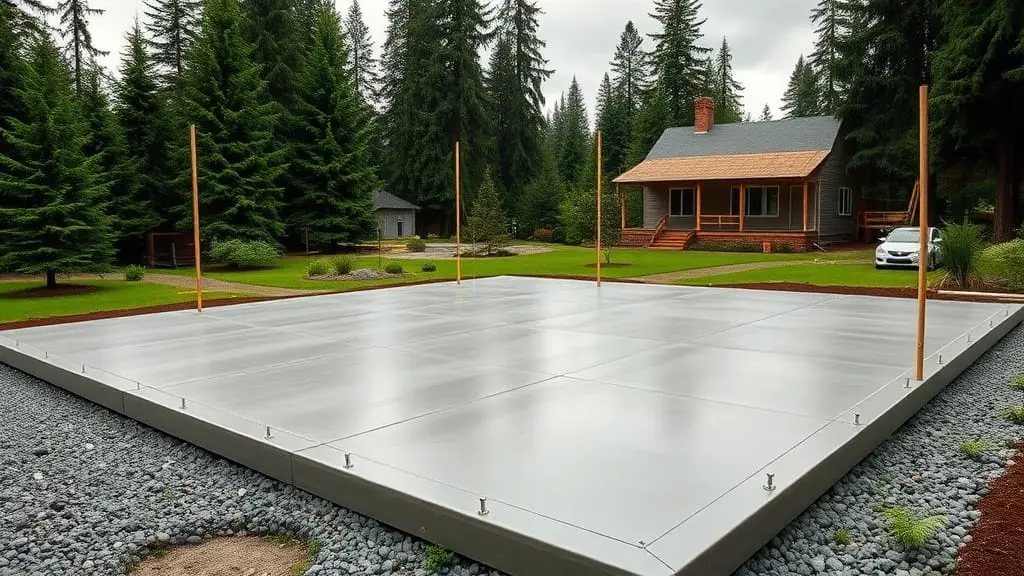
If you live in Bellingham and wait for a perfectly dry week to pour concrete, you might wait all year. With roughly 200 overcast or rainy days annually and 37 inches of total rainfall, our marine climate makes the question unavoidable: can you actually pour concrete in the rain? The honest answer is nuanced. Light drizzle with proper precautions? Usually fine. A heavy downpour with standing water? That is a recipe for a ruined slab. The difference between a successful rainy-day pour and a costly failure comes down to preparation, timing, and knowing exactly when to pull the plug.
As concrete contractors who have poured thousands of yards across Whatcom County—from Fairhaven foundations to Ferndale farm slabs—we have developed rain-management protocols that keep projects on schedule without sacrificing quality. Here is an honest, detailed breakdown of what works, what does not, and how we make the call on pour day.
How Rain Actually Damages Fresh Concrete
To understand when it is safe to pour and when it is not, you need to understand what rain does to concrete at the chemical level. Concrete is not simply "drying"—it is undergoing a chemical reaction called hydration. Portland cement reacts with a precise amount of water to form calcium silicate hydrate crystals, the compound that gives concrete its strength. The water-to-cement ratio is carefully calculated for every mix. Too much water weakens those crystal bonds permanently.
The Three Stages of Vulnerability
- During placement and consolidation (first 0-30 minutes): This is the most vulnerable period. Rain falling into the mix before it is screeded and bull-floated adds uncontrolled water to the surface. This dilutes the cement paste at the top of the slab—exactly where you need maximum strength for wear resistance. We have seen driveways in South Hill and Alabama Hill where surface dusting and scaling appeared within the first winter because rain hit the slab during placement.
- During finishing (30 minutes to 2-3 hours): As the bleed water rises and finishing operations begin, rain disrupts the critical timing of troweling. Finishers need to work the surface at precisely the right moisture level. Additional rain water makes it impossible to judge when the surface is ready, and troweling rain into the surface traps excess moisture that causes blistering and delamination.
- During initial curing (3-24 hours): Once the surface has been finished and begins to set, moderate rain is actually less harmful—the surface has firmed enough to resist water infiltration. However, heavy rain can erode the surface texture, wash out fines, and create pitting. Pooling water on a slab that has not fully set can create soft spots that never reach design strength.
What the Damage Looks Like
Rain damage to fresh concrete manifests in several ways, often not apparent until weeks or months later:
- Surface dusting: A weak, powdery surface that sheds fine particles underfoot. Caused by excess water diluting the surface paste.
- Scaling and spalling: Thin layers of the surface flake off, especially after the first freeze-thaw cycle. Properties in Sudden Valley and Birch Bay, which see slightly colder winter temperatures than downtown Bellingham, experience this aggressively.
- Crazing: A network of fine surface cracks resembling a spiderweb. Caused by rapid uneven drying after excess water is trapped in the surface layer.
- Reduced strength: A slab designed for 4,000 PSI compressive strength might only reach 2,500-3,000 PSI if significant rain contaminated the mix. This compromises structural integrity for foundations and heavily loaded slabs.
- Discoloration: Uneven water exposure creates permanent light and dark patches. On decorative or stamped concrete, this ruins the aesthetic investment.
Light Rain vs. Heavy Rain: Where We Draw the Line
Not all rain is created equal, and Bellingham's rain patterns actually work in our favor more often than you might think. Our marine climate produces a lot of light, steady drizzle rather than the intense downpours common in other regions. Here is how we categorize conditions:
Green Light: Proceed with Precautions
- Overcast with intermittent mist or light drizzle: This describes roughly 40% of our "rainy" days. Moisture in the air actually helps concrete cure by preventing rapid surface drying. A light mist during curing is beneficial, not harmful.
- Brief showers forecast with dry windows: If radar shows a 20-minute shower followed by hours of dry weather, we can time placement to avoid the shower and protect the surface during the brief wet period.
- Rain expected 4+ hours after pour: Once concrete has set for 4-6 hours, it can handle moderate rain without surface damage. If we start at 7 AM and rain is forecast for noon, we have a comfortable window for a standard residential pour.
Yellow Light: Possible with Full Protection
- Steady light rain (under 0.10 inches per hour): This requires full tarp coverage during placement and finishing. We erect temporary tent structures over the pour area that allow crews to work underneath while keeping rain off the fresh surface.
- Intermittent moderate showers: If we can protect the surface during showers and work during breaks, a pour can proceed. This demands extra labor for tarp management and flexible timing.
Red Light: Postpone
- Heavy sustained rain (over 0.25 inches per hour): No amount of tarping protects against this volume of water. Ground saturation makes subgrade conditions unstable, and the risk of water contaminating the mix during truck discharge is too high.
- Thunderstorms or wind-driven rain: Wind defeats tarp coverage and makes finishing operations dangerous. While rare in Bellingham, fall and winter storms can bring these conditions.
- Saturated subgrade: Even if rain stops, a subgrade that is waterlogged will not support fresh concrete properly. Standing water under the slab prevents proper drainage during curing and can cause settlement later. We test subgrade conditions on every project—this is especially critical in low-lying areas like Birchwood and parts of the Lettered Streets where water tables run high.
How Bellingham Contractors Protect Pours from Rain
Professional rain protection goes far beyond throwing a tarp over wet concrete. Here are the methods we use on Whatcom County projects when weather is uncertain:
Pre-Pour Preparation
- Tent structures and tarps: For critical pours, we erect temporary canopy structures over the work area. On smaller projects like sidewalks and walkways, a simple frame-and-tarp system provides adequate coverage. Larger pours like driveways require more elaborate setups—sometimes renting commercial tent frames that span 20-30 feet.
- Polyethylene sheeting on standby: Every pour in Whatcom County should have 6-mil poly sheeting staged and ready to deploy within 60 seconds. We pre-cut sheets to the slab dimensions and position them at the edges for rapid deployment.
- Subgrade protection: We cover prepared subgrades with poly sheeting overnight if rain is expected. A saturated subgrade can delay a pour by days. Homes on the glacial till soil common in Sehome, Columbia, and Happy Valley are especially vulnerable to subgrade saturation because the dense clay drains so slowly.
- Concrete mix adjustments: When marginal conditions are expected, we can specify a lower water-to-cement ratio, accelerating admixtures that speed initial set time, or air entrainment that improves freeze-thaw resistance. These adjustments typically add $8-$15 per yard to material costs but provide significant insurance.
During the Pour
- Dedicated tarp crew: On rain-risk days, we assign one or two crew members solely to weather management. They monitor conditions, deploy coverings, and manage water diversion. This adds $300-$600 in labor to a project but prevents thousands in potential damage.
- Rapid placement and finishing: Our crews adjust their workflow for efficiency when weather is uncertain. Instead of pouring the entire slab and then finishing, we pour and finish in sections so that completed areas can be covered while work continues on the next section.
- Surface protection timing: The moment finishing is complete on a section, it gets covered with poly sheeting supported on stakes or frames so the plastic does not contact the wet surface. Direct contact can cause discoloration and texture defects.
Post-Pour Curing Protection
- Curing compounds: A liquid membrane-forming curing compound sprayed immediately after finishing creates a barrier that retains internal moisture while blocking external rain. This is standard practice on every exterior pour we do in Whatcom County regardless of weather forecast.
- Plastic sheeting for extended curing: After initial set (typically 4-8 hours), we cover slabs with poly sheeting that remains in place for 7 days. This controls moisture loss, protects against rain, and maintains optimal curing temperature. It is especially valuable on projects in Lynden and Everson where winter night temperatures can drop into the high 20s.
Scheduling Strategies for Whatcom County's Weather
The secret to successful concrete work in Bellingham is not avoiding rain—it is planning around it intelligently. Here is how we approach scheduling for local conditions:
- Book critical pours during the dry season: July through early September offers the most reliable weather. Large projects like driveway installations and foundation pours are ideally scheduled in this window. Demand is highest during these months, so booking 4-6 weeks ahead is advisable.
- Use 10-day forecasts, not daily predictions: We start monitoring weather models 10 days before a scheduled pour and make preliminary go/no-go decisions 3 days out. Final confirmation happens the morning of the pour based on real-time radar.
- Build weather days into the schedule: Every project timeline includes buffer days for weather delays. A project estimated at 5 working days in July gets 7-8 working days in October. Setting realistic expectations prevents frustration.
- Take advantage of morning dry windows: Bellingham's weather pattern often features drier mornings with rain developing in the afternoon, particularly in spring and fall. Starting pours at 6-7 AM gives us 5-6 hours of work before afternoon showers arrive—enough time for a standard residential slab to reach initial set.
- Off-season scheduling advantages: While summer is ideal for weather, scheduling from October through April often means faster availability, and some contractors—ourselves included—offer slightly reduced pricing during slower months. If your project can accommodate weather flexibility, off-season scheduling saves money. Smaller pours like pool deck repairs or walkway sections are good candidates for off-season work.
What to Do If Rain Hits Your Fresh Concrete
Despite the best planning, unexpected rain happens. If you have a fresh pour and rain starts, here is the priority action list:
- Cover immediately if the surface has not been finished: Deploy poly sheeting over the entire slab. Speed matters more than perfection—get coverage first, then adjust.
- Do NOT work rain into the surface: The worst thing a finisher can do is trowel rain water into the concrete. This traps excess water in the surface layer and guarantees scaling. If rain hits during finishing, stop finishing and cover.
- If the surface has set (4+ hours): Moderate rain is unlikely to cause structural damage. Cover with sheeting to prevent erosion of the surface texture and water pooling.
- Assess after rain stops: Look for areas where rain water pooled. Gently squeegee standing water off the surface. Examine for wash marks, pitting, or softened areas.
- Document everything: Photograph the conditions, timing of rain, and actions taken. If surface defects develop later, documentation helps your contractor determine the cause and appropriate remedy.
Cost Implications of Rain Protection
Professional rain management is an investment, not an expense. Here is what it typically adds to a project:
- Tarp and frame setup: $200-$800 depending on project size
- Dedicated weather crew: $300-$600 per pour day
- Accelerating admixtures: $8-$15 per cubic yard
- Curing compounds: $0.10-$0.25 per square foot (standard on all our pours)
- Weather delay costs: $0 with proper scheduling buffers; $500-$1,500 per day if a ready-mix truck is turned away and the project is rescheduled
Compare these costs to replacing a rain-damaged slab: $8-$15 per square foot for standard concrete, $15-$30+ for decorative finishes. A 500-square-foot driveway replacement runs $4,000-$7,500. Spending $500-$1,000 on rain protection is simple math.
The Bottom Line for Bellingham Homeowners
Yes, you can pour concrete in the rain in Bellingham—with the right contractor, proper precautions, and a clear understanding of the risks. Our marine climate actually cooperates more than people assume: light Pacific drizzle is far less damaging than the intense thunderstorms of the Midwest or Southeast. The key is working with experienced local contractors who have rain protocols built into every project plan.
If a contractor tells you they never pour in any rain in Whatcom County, they either do very little work or they are being dishonest. If a contractor tells you rain does not matter at all, find a different contractor. The professional approach is somewhere in between: respect the weather, prepare for it, and know when conditions cross the line from manageable to unacceptable.
Every project we take on in Bellingham—whether it is a patio in Sunnyland, a foundation in Cordata, or a barn slab outside Everson—includes a weather management plan. It is simply part of responsible concrete construction in the Pacific Northwest.
Ready to get started? Contact us today for a free estimate — we serve all of Bellingham and Whatcom County.