
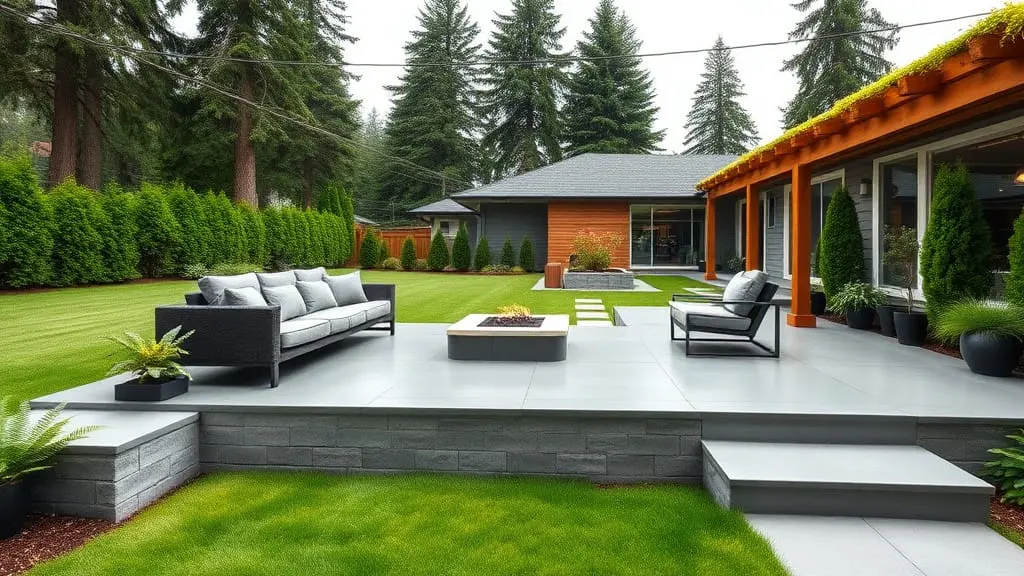
Small yards are the norm in many of Bellingham's most desirable neighborhoods. The tight urban lots in the Lettered Streets, compact bungalow properties in Sunnyland and York, and zero-lot-line townhomes in Barkley Village and Cordata all share the same challenge: how do you create meaningful outdoor living space when your backyard is measured in hundreds of square feet rather than thousands? Add Bellingham's impervious surface limits and 37 inches of annual rainfall to the equation, and patio design for small yards becomes a genuine puzzle.
The good news is that a well-designed small patio can feel just as functional and inviting as a sprawling suburban deck. After installing patios on dozens of compact Bellingham lots, we have learned which design strategies actually work in our climate and which ones waste precious square footage. Here are our best recommendations for making the most of limited outdoor space.
Understanding Bellingham's Impervious Surface Limits
Before sketching any patio design, you need to understand a regulation that directly impacts small-yard projects. The City of Bellingham enforces impervious surface limits in residential zones, typically capping lot coverage at 35 percent. This includes your home's footprint, garage, driveway, sidewalks, and any standard concrete patio.
On a typical 5,000-square-foot lot in Sehome or the Lettered Streets, your home and driveway may already consume 25-30 percent of that allowance, leaving very little room for additional concrete. This is where smart design and material choices become critical.
Working Within the Limits
- Pervious concrete: This specialized mix allows water to drain through the slab and counts as a reduced-impact surface under Bellingham's stormwater code. It can effectively increase your available patio area by qualifying for a lower impervious surface calculation
- Strategic placement: Positioning your patio adjacent to the house or over an area already counted as impervious (like an old deteriorating slab) avoids adding new coverage
- Combined function: A patio that also serves as a walkway eliminates the need for a separate path, consolidating impervious surface into one multi-use area
We handle impervious surface calculations and permitting for all our Bellingham projects. On small lots, this regulatory knowledge often determines whether a patio project is feasible at all.
Multi-Functional Design Strategies
On a small lot, every square foot of patio must earn its place. The most successful small patios we have built in Bellingham serve at least two or three functions simultaneously.
The Dining and Entertaining Hybrid
A 200-square-foot patio can comfortably accommodate a four-person dining table and still leave room for two lounge chairs if the layout is designed intentionally. We achieve this by using an L-shaped or curved patio footprint that creates distinct zones without wasting space on separation. In a recent project in Happy Valley, we poured a 12-by-18-foot patio with a 6-foot radius curved extension that created a natural seating nook separate from the dining area. The total footprint was just 240 square feet but functioned like a much larger space.
Built-In Seating to Eliminate Furniture Footprint
Freestanding chairs and benches consume valuable floor space and create visual clutter that makes a small patio feel cramped. Built-in concrete bench seating along one or two edges of your patio solves this problem elegantly. A 16-inch-high, 18-inch-deep concrete seat wall provides comfortable seating for multiple adults while doubling as a retaining element or planter border.
We have installed seat walls on small patios throughout Fairhaven, Samish, and Columbia that transformed awkward, undersized spaces into comfortable gathering areas. The cost to add a built-in seat wall during patio installation is typically $30-$50 per linear foot, far less than purchasing quality outdoor furniture that takes up more room.
Step-Down Transitions for Sloped Lots
Many Bellingham yards, particularly in South Hill, Alabama Hill, and Edgemoor, have significant slope. Rather than fighting the grade with extensive excavation, a step-down design uses the natural terrain to create tiered patio levels. A small upper patio off the back door transitions down one or two steps to a lower sitting area. Each level is compact on its own, but together they create a surprisingly generous outdoor living space that follows the hillside naturally.
This approach also works beautifully with retaining walls that serve as both structural elements and visual boundaries between patio zones. A 24-inch retaining wall between levels creates natural built-in seating at the upper level while defining the lower area as a distinct room.
Visual Tricks That Make Small Patios Feel Larger
Design professionals use several techniques to create the perception of more space. These strategies cost little or nothing extra during installation but dramatically change how a patio feels.
Diagonal and Curved Lines
A rectangular patio set parallel to the house reads as a narrow strip. The same square footage laid out on a diagonal, with corners angled away from the house, creates longer sight lines and a sense of spaciousness. Curved edges work even better. The eye follows a curve naturally, and the organic shape prevents the patio from reading as a rigid box crammed into a small yard.
Stamped concrete patterns laid on a diagonal reinforce this effect. A herringbone or running-bond stamp pattern oriented at 45 degrees to the house creates dynamic visual movement that draws the eye across the full width and length of the patio rather than emphasizing its boundaries.
Color and Texture Continuity
Using the same concrete color and texture from the patio surface through adjacent walkways and steps creates visual continuity that makes the entire outdoor area read as one connected space. Conversely, changing materials or colors at every transition point highlights boundaries and makes each area feel smaller and isolated.
In Bellingham's evergreen landscape, warm earth tones like sandstone, buff, and terra cotta complement the surrounding greenery while reflecting enough light to brighten shaded small yards. Cool grays and charcoal tones work in sunnier locations but can make north-facing patios in Birchwood or shaded yards in Silver Beach feel dark and smaller than they are.
Strategic Lighting for Evening Expansion
Bellingham's early winter sunsets mean your patio spends many months in darkness by late afternoon. Well-placed lighting extends usability and, when designed correctly, makes the space feel larger at night than during the day. Recessed lights in seat walls wash the patio surface with soft light. Uplighting on nearby trees or fences draws the eye upward and outward beyond the patio edges. String lights overhead create a ceiling plane that defines the space as a room without enclosing it.
We recommend integrating conduit and junction boxes into the concrete pour for future lighting installation. Adding electrical infrastructure during construction costs $200-$400 and saves $1,000 or more compared to retrofitting later.
Compact Features That Add Function Without Consuming Space
Fire Features for Year-Round Use
A compact concrete fire pit or fire table can be the centerpiece of a small patio without dominating it. A 36-inch round built-in gas fire pit requires only about 7 square feet of floor space but transforms the patio into a three-season destination. In Bellingham's cool, damp climate, a fire feature extends patio use from April through November rather than just the summer months.
Propane fire tables are the most practical option for small Bellingham patios because they require no chimney, produce no smoke or ash, and can be placed closer to the house than wood-burning alternatives. A 20-pound propane tank tucked beneath a built-in concrete surround provides 8-12 hours of use and takes up minimal space. Budget $1,500-$3,000 for a built-in gas fire feature integrated with a concrete patio pour.
Vertical Elements
When you cannot expand horizontally, go vertical. Concrete planter walls along the patio perimeter provide gardening space without stealing floor area. A 12-inch-wide raised planter running the length of one edge adds greenery, defines the patio boundary, and can screen views of neighbors on adjacent properties, a common need on compact lots in Barkley Village and Cordata.
Vertical trellises mounted on planter walls support climbing plants that create green walls enclosing the patio space. In Bellingham's mild climate, evergreen clematis, climbing hydrangea, and jasmine thrive on vertical structures and provide year-round visual interest.
Design Templates for Common Bellingham Lot Sizes
The 150-Square-Foot Urban Patio
Common in Lettered Streets and Sunnyland bungalow backyards. An 10-by-15-foot patio with built-in seating along two edges, a small bistro table in the center, and integrated planter boxes. Stamped concrete in a flagstone pattern adds visual interest without the maintenance of actual stone joints in our wet climate. Budget: $2,250-$3,750 for a basic finish, $3,750-$5,250 for stamped and colored.
The 250-Square-Foot L-Shape
Ideal for corner lots and properties where the back door is not centered on the wall. An L-shaped patio design wraps around the house corner, creating a cooking zone near the kitchen door and a separate relaxation area around the bend. This configuration works exceptionally well in Happy Valley and Samish where mid-century homes often have offset rear entries. Budget: $2,500-$5,000 basic, $5,000-$7,500 decorative.
The 350-Square-Foot Tiered Design
Perfect for sloped lots in South Hill and Alabama Hill. Two levels connected by a single step, with the upper level serving as a dining area directly off the house and the lower level functioning as a lounge or fire pit area. A short retaining wall between levels doubles as seating. Budget: $4,500-$7,000 basic, $7,000-$10,500 with decorative finishes and built-in features.
Practical Considerations for Bellingham's Climate
Small patios in our climate need the same engineering as large ones. In some ways, they demand more attention to detail because problems are more visible and impactful on a compact surface.
- Drainage is critical: On a small patio, even minor ponding is obvious and problematic. We slope every small patio at 3-4 percent minimum and install drip edges or channel drains along the downhill side to prevent water from pooling against the house or flooding adjacent garden beds
- Moss prevention: Shaded small patios in Bellingham develop moss quickly. Concrete sealing every 2-3 years dramatically reduces moss adhesion and keeps the surface safe and attractive
- Snow and ice: Small patios are easier to maintain in winter, but proper slope ensures meltwater drains away rather than refreezing overnight into dangerous ice patches
- Furniture anchoring: Bellingham experiences occasional windstorms from the south and southeast. On small, elevated patios, lightweight furniture can become airborne. Built-in elements eliminate this concern entirely
Getting the Most From Your Small Patio Investment
The best small patios in Bellingham share a common trait: they were designed with intention rather than defaulting to a simple rectangle. Investing in thoughtful layout, built-in features, and quality materials transforms a small outdoor area from an afterthought into the most-used room in your home for eight or more months of the year.
Whether your yard is a 1,200-square-foot lot in the Lettered Streets or a modest townhome courtyard in Barkley Village, there is a concrete patio design that maximizes your space, respects the city's impervious surface limits, and stands up to decades of Bellingham weather. Spending time on design before breaking ground is the single best investment you can make on a small-lot patio project.
Ready to get started? Contact us today for a free estimate — we serve all of Bellingham and Whatcom County.