
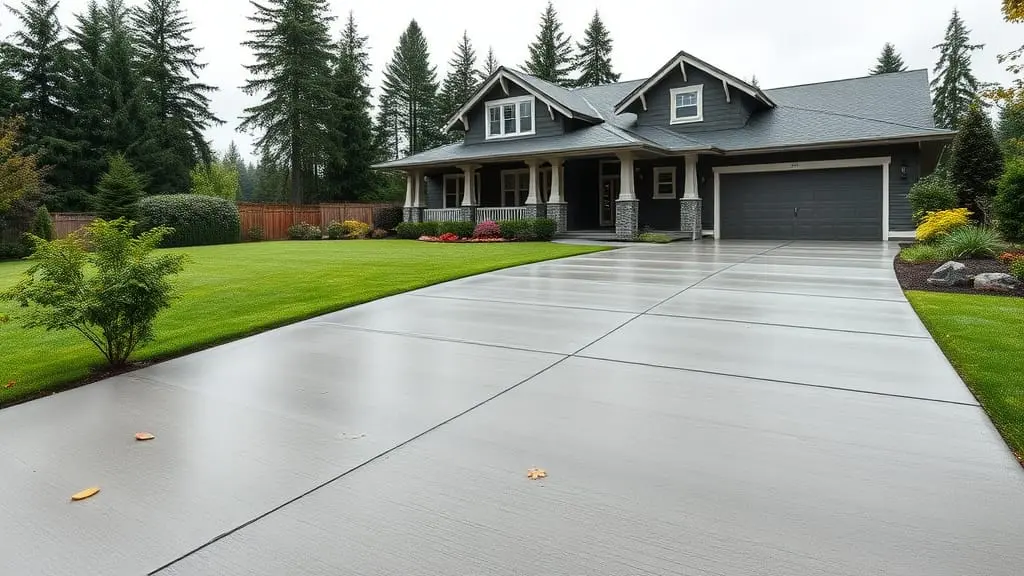
Every winter, when a surprise cold snap coats Bellingham's streets with a layer of ice or a rare snowfall blankets Whatcom County, the idea of a heated driveway sounds incredibly appealing. No shoveling, no salt damage, no slipping on black ice as you carry groceries to your car. Radiant heated driveways—systems that embed heating elements directly in the concrete to melt snow and ice automatically—have been a premium feature in cold-climate regions for decades. But do they make financial sense in Bellingham, where winters are more wet than white?
As concrete contractors who have installed both standard and heated driveways across Whatcom County, we get this question regularly. The honest answer is nuanced. Heated driveways offer real benefits beyond just snow removal, but the economics depend heavily on your specific situation—your property's slope, your tolerance for winter maintenance, your utility costs, and how long you plan to stay in your home. Let's break it down with real numbers and local context.
How Heated Concrete Driveways Work
A heated driveway uses a radiant heating system embedded within the concrete slab to warm the surface above freezing, preventing snow and ice accumulation. There are two primary technologies used in residential installations:
Hydronic (Hot Water) Systems
Hydronic systems circulate heated water (mixed with antifreeze) through a network of PEX tubing embedded in the concrete slab. A boiler—typically fueled by natural gas, propane, or electricity—heats the water and pumps it through the tubing loops. When the system activates, heat radiates from the tubing through the concrete to the surface, warming it to 35–40°F.
Hydronic systems are the most common choice for larger driveways (over 500 square feet) because they're more energy-efficient at scale and provide even, consistent heating. The PEX tubing is installed in a serpentine pattern, typically spaced 9–12 inches apart, and laid on top of the reinforcement grid before the concrete is poured. In Bellingham, the boiler is usually housed in the garage or a mechanical room and can often be tied into the home's existing heating system.
Electric Cable Systems
Electric systems use heating cables or mats embedded in the concrete, similar to electric radiant floor heating used inside homes. When activated, electric current flowing through the cables generates heat that warms the concrete surface. Electric systems are simpler to install and have lower upfront costs for smaller driveways (under 400 square feet), but they cost significantly more to operate.
Electric systems are typically wired to a dedicated circuit and controlled by a sensor that detects temperature and moisture, activating the system automatically when conditions favor ice or snow formation. In Bellingham's climate, where temperatures frequently hover right around freezing, these sensors are critical to preventing the system from running continuously and driving up electricity costs.
Installation Costs in Bellingham
The cost of a heated driveway includes both the heating system and the concrete work itself. Because the heating elements must be installed during the pour, heated driveways are best done as new installations or complete replacements—retrofitting heating into an existing driveway is rarely practical or cost-effective.
Hydronic System Costs
For a typical two-car driveway (500 square feet) in Bellingham:
- PEX tubing and fittings: $1,500–$2,500
- Boiler unit (if dedicated): $3,000–$6,000
- Pump, manifold, and controls: $1,500–$2,500
- Sensor system (temperature and moisture): $500–$1,000
- Labor for heating system installation: $2,000–$4,000
- Standard concrete driveway (5-inch, reinforced): $5,000–$7,500
- Total installed cost: $13,500–$23,500
- Per square foot: $27–$47
Compare this to a standard reinforced concrete driveway at $10–$15 per square foot, and the heated option adds roughly $17–$32 per square foot—effectively doubling to tripling the cost of the driveway itself.
Electric System Costs
For the same 500-square-foot driveway:
- Heating cables or mats: $3,000–$5,000
- Electrical panel upgrade (if needed): $500–$2,000
- Sensor system and controller: $500–$1,000
- Electrician labor: $1,000–$2,000
- Standard concrete driveway (5-inch, reinforced): $5,000–$7,500
- Total installed cost: $10,000–$17,500
- Per square foot: $20–$35
Electric systems have a lower upfront cost but significantly higher operating costs, which we'll examine next.
Operating Costs: The Bellingham Reality
This is where the Bellingham-specific analysis gets interesting. Operating costs for heated driveways are driven by two factors: how often the system needs to run, and what energy costs in our area.
How Often Does It Actually Snow in Bellingham?
Bellingham averages just 6–10 inches of snowfall per year, spread across a handful of events typically occurring between December and February. Many winters, the city sees little to no accumulation at all. However, snow frequency varies dramatically by elevation and neighborhood:
- Low elevation (Fairhaven, Boulevard Park, Birchwood): Snow rarely sticks. Perhaps 2–4 events per winter requiring any action, and accumulation over 2 inches is uncommon
- Mid elevation (Sehome, Lettered Streets, Sunnyland, York): Moderate snow events 3–6 times per winter. Some accumulation, but usually melts within 24–48 hours
- Higher elevation (South Hill, Alabama Hill, Geneva, Happy Valley, Sudden Valley): More frequent snow events, 5–10 times per winter. Accumulation can persist for days, and icy conditions are more common
But here's what many people overlook: heated driveways aren't just about snow. They also prevent black ice—that nearly invisible frozen glaze that forms when temperatures drop below freezing while surfaces are damp. In Bellingham, where surfaces are damp for six months straight and overnight temperatures regularly dip below 32°F from November through March, black ice is a far more frequent hazard than snow. A heated driveway sensor may activate 30–60 times per winter for ice prevention, even in a year with minimal snowfall.
Energy Costs for Bellingham
Bellingham's electricity rates (through Puget Sound Energy) average $0.10–$0.12 per kilowatt-hour for residential customers. Natural gas rates run approximately $1.20–$1.50 per therm. Using these rates:
Electric system operating costs:
- A 500 sq ft heated driveway draws approximately 25–35 kilowatts when running
- Average annual run time in Bellingham: 150–300 hours (heavily dependent on elevation and sensor settings)
- Annual electricity cost: $375–$1,260
- Typical Bellingham estimate: $500–$800 per winter season
Hydronic system operating costs:
- A gas-fired boiler serving a 500 sq ft driveway uses approximately 1.5–2.5 therms per hour of operation
- Average annual run time in Bellingham: 150–300 hours
- Annual gas cost: $270–$1,125
- Annual pump electricity: $50–$100
- Typical Bellingham estimate: $350–$600 per winter season
These numbers put Bellingham heated driveway operating costs at roughly $350–$800 per year, depending on system type, driveway size, elevation, and how aggressively the sensor is calibrated. In comparison, homeowners in cities like Minneapolis or Denver—where systems run 500–800+ hours annually—face operating costs of $1,000–$2,000+ per year.
Benefits Beyond Snow Removal
When evaluating heated driveways for Bellingham specifically, the benefits extend beyond the obvious snow and ice elimination:
Extended Concrete Lifespan
This is arguably the most significant hidden benefit. Freeze-thaw cycles are the number one cause of concrete deterioration in Whatcom County. By keeping the driveway surface above freezing during cold events, a heated system virtually eliminates freeze-thaw damage. Standard concrete driveways in Bellingham typically last 25–30 years. Heated driveways that never experience freeze-thaw cycles can last 40–50+ years. Over the life of the home, eliminating one or two driveway replacements ($8,000–$15,000 each) significantly changes the cost equation.
Elimination of Deicing Chemicals
Chemical deicers—salt, calcium chloride, magnesium chloride—are extremely damaging to concrete, landscaping, and the environment. Bellingham homeowners who use deicers on their driveways accelerate surface scaling and spalling, poison surrounding soil and plants, and contribute to waterway contamination. A heated driveway eliminates the need for any deicing chemicals entirely.
Safety on Sloped Driveways
For homeowners in South Hill, Alabama Hill, Geneva, and other hilly Bellingham neighborhoods, a steep icy driveway isn't just inconvenient—it's genuinely dangerous. We've worked with multiple homeowners who invested in heated driveways after vehicles slid on icy slopes, damaging cars, landscaping, or worse. For driveways with slopes greater than 8–10%, heated systems provide a level of winter safety that no amount of salt or sanding can match.
Reduced Moss and Algae
While heated driveways don't run during summer, the periodic warming during our cool, damp winter months disrupts the growing conditions that moss and algae need to colonize concrete surfaces. Homeowners with heated driveways in shaded areas of Samish, Birchwood, and Silver Beach have reported noticeably less moss growth compared to adjacent unheated surfaces.
Drawbacks and Honest Considerations
A balanced analysis requires acknowledging the downsides:
High Upfront Cost
The $10,000–$23,000 total installed cost is the biggest barrier. That premium buys a lot of bags of sand, hours of shoveling, and professional snow removal services. At $350–$800 per year in operating costs plus the upfront premium, the system may not pay for itself in pure snow/ice removal economics for 20–30+ years—unless you factor in extended concrete lifespan and avoided deicer damage.
Repair Complexity
If a heating element fails within the concrete slab, repair is extremely difficult and expensive. Hydronic PEX tubing is generally reliable (rated for 50+ year lifespan), but a leak in the system requires either cutting into the concrete to access the damaged section or abandoning that zone and installing supplemental heating. Electric cable failures are similar. This risk makes choosing a reputable installer with proven experience critical.
Mild Bellingham Winters
The honest truth is that Bellingham's winters are mild compared to regions where heated driveways are commonplace. In an average winter, most homeowners in lower-elevation neighborhoods could manage with a bag of sand, a shovel, and a few hours of their time across the entire season. The heated driveway is addressing a real problem, but it's a modest problem in most Bellingham locations.
Energy Consumption
Even at Bellingham's relatively moderate usage levels, heated driveways consume significant energy. For environmentally conscious homeowners—and Bellingham has many—the energy footprint may be difficult to justify for a convenience that traditional methods can address, albeit less conveniently.
Who Should Seriously Consider a Heated Driveway in Bellingham?
Based on our local experience, heated driveways make the most sense for these specific situations:
- Steep driveways in hillside neighborhoods: Properties in South Hill, Alabama Hill, Geneva, Happy Valley, and Sudden Valley with driveway slopes exceeding 8% benefit enormously from guaranteed ice-free surfaces. Safety justifies the investment
- Homeowners with mobility limitations: For elderly residents or those with disabilities, the inability to shovel or safely navigate icy surfaces makes heated driveways a quality-of-life investment rather than a luxury
- Higher-elevation properties: Locations above 500 feet—parts of Sudden Valley, upper South Hill, areas near Lake Whatcom—experience more frequent snow and ice events that increase the system's utilization and value
- Long-term homeowners building new: If you're building a new home and plan to stay for 20+ years, the incremental cost of adding heating during initial construction is much lower than retrofitting later, and the extended concrete lifespan provides real savings
- High-value properties: In premium neighborhoods like Edgemoor, Chuckanut, and waterfront properties where driveways are a significant architectural element, heated systems protect a substantial investment and add measurable resale value
Alternatives to Full Driveway Heating
For homeowners who want some winter ice protection without the full cost of heating an entire driveway, consider these alternatives:
- Heated tire tracks only: Installing heating elements in two 24-inch-wide strips where tires travel reduces material and operating costs by 60–70% while providing vehicle traction. Cost: $5,000–$10,000 for a two-car driveway
- Heated walkway only: Heating just the walkway from driveway to door (typically 40–80 sq ft) costs $2,000–$5,000 and addresses the most common slip-and-fall risk area
- Heated apron section: Heating just the steepest 10–15 feet of a sloped driveway costs $3,000–$7,000 and prevents the most dangerous section from icing
- Portable heated mats: Electric mats placed on the driveway surface during winter cost $200–$500 each and require no permanent installation, but they're unsightly and less effective than embedded systems
These partial approaches are increasingly popular with Bellingham homeowners who want targeted protection without the full investment. We've installed heated tire tracks and walkway sections in Cordata, Barkley Village, and throughout Ferndale and Lynden where flat driveways make full heating hard to justify but targeted heating for walkways makes practical sense.
Making Your Decision
A heated concrete driveway in Bellingham is an investment that delivers real value in specific circumstances but isn't a universal recommendation. If safety on a steep driveway is your primary concern, the investment is easy to justify. If you're on a flat lot in Cordata and just want to avoid occasional shoveling, your money is probably better spent on a thicker slab with quality reinforcement, proper drainage, and regular sealing.
We're always happy to discuss the specifics of your situation and provide an honest assessment of whether heated concrete makes sense for your property. Our experience across Whatcom County—from sea-level properties in Birch Bay to hillside estates in Sudden Valley—gives us the local knowledge to help you make the right call for your needs and budget.
Ready to get started? Contact us today for a free estimate — we serve all of Bellingham and Whatcom County.