
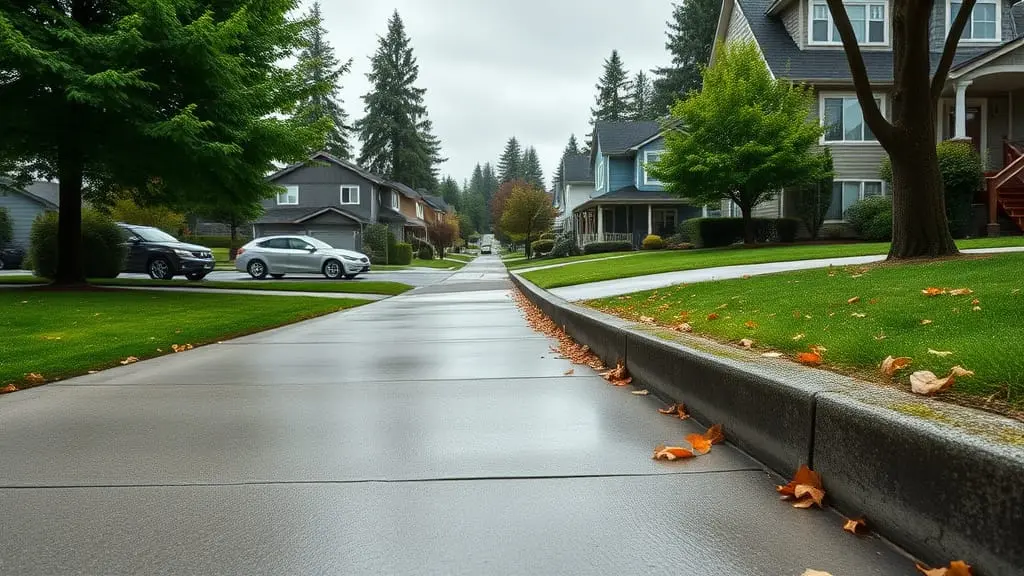
Your front walkway is the first impression visitors have of your home. In Bellingham, where Craftsman bungalows in the Lettered Streets, mid-century ranches in Sehome, and modern builds in Cordata all reflect distinct architectural identities, a thoughtfully designed walkway does more than connect the sidewalk to your front door—it sets the tone for your entire property. The right walkway design enhances curb appeal, increases home value, and provides a safe, durable path that handles decades of Pacific Northwest weather.
As concrete contractors who have installed hundreds of front walkways across Whatcom County, we have seen how the right design transforms a property's appearance and how the wrong one detracts from it. This guide covers the most popular and effective walkway designs for Bellingham homes, with practical considerations for our climate, soil conditions, and architectural styles.
Stamped Concrete Walkways
Stamped concrete remains the most popular decorative walkway option in Bellingham, and for good reason. It delivers the look of natural stone, brick, or slate at a fraction of the cost, and the monolithic surface performs well in our wet climate when properly sealed.
Popular Stamp Patterns for Bellingham Homes
- Ashlar slate: The most requested pattern in Bellingham, ashlar slate mimics the irregular geometric shapes of natural slate. It complements Craftsman and Tudor-style homes common in Fairhaven, the Lettered Streets, and South Hill. The irregular joint lines hide minor cracking better than geometric patterns.
- Cobblestone: A classic choice that pairs beautifully with older homes in Sehome and the Lettered Streets. The rounded stone texture provides excellent slip resistance when wet—a real advantage during Bellingham's 6-month wet season.
- Herringbone brick: Ideal for homes with brick accents or traditional architectural styles. We install this frequently in established neighborhoods like Sunnyland and Columbia where brick-facade homes are common.
- Wood plank: A modern option that replicates the look of wood decking without the rot, moss, and maintenance issues that plague real wood walkways in our marine climate. Popular in newer developments in Cordata and Barkley Village.
- Random stone: A naturalistic pattern that works with Pacific Northwest landscaping styles. The irregular shapes and sizes create an organic feel that blends with the gardens and native plantings that characterize Bellingham landscaping.
Color Choices That Work in Bellingham
Color selection matters more in Bellingham than in sunnier climates because our overcast skies, frequent rain, and abundant vegetation create a specific visual context. Based on hundreds of local projects, these strategies work best:
- Warm earth tones (most popular): Sandstone, buff, terra cotta, and desert tan provide warmth against our gray skies and green landscaping. These complement the natural wood siding common on Bellingham homes.
- Charcoal and slate gray: Elegant and modern, gray tones work well with contemporary architecture in Edgemoor and new builds in Cordata. Moss and algae show more on lighter grays, making regular sealing and maintenance essential.
- Two-tone combinations: A base color with a contrasting release color creates depth and realism. A sandstone base with charcoal release mimics natural stone variation and looks exceptional in our diffused Pacific Northwest light.
Cost: Stamped concrete walkways in Bellingham typically cost $15-$28 per square foot installed. A 4-foot-wide, 30-foot-long walkway (120 square feet) runs $1,800-$3,360. Multi-color or complex patterns with borders add 15-25% to the base price.
Exposed Aggregate Walkways
Exposed aggregate is a Bellingham favorite that never goes out of style. By washing away the top layer of cement paste to reveal the natural stone aggregate beneath, this finish creates a textured, visually rich surface with inherent slip resistance—critical for our wet climate.
Aggregate Options
- Local river rock: Rounded pebbles in natural grays, browns, and tans sourced from local quarries. This is the most affordable option and blends naturally with Pacific Northwest landscapes. Ideal for homes in Silver Beach, Birchwood, and other neighborhoods with naturalistic landscaping.
- Decorative aggregate blends: Custom mixes that incorporate colored glass, quartz, granite, or imported stone create distinctive surfaces. We have used blue-gray quartz aggregate for a stunning walkway in Edgemoor and warm-toned granite blend for a Fairhaven Craftsman.
- Seeded aggregate: Rather than relying on the standard concrete mix, decorative stones are "seeded" (pressed into the surface) before the top is washed. This allows precise control of the visible aggregate color and size without changing the structural concrete mix.
Performance in Bellingham Climate
Exposed aggregate excels in our climate for several reasons. The textured surface provides excellent traction even when wet, reducing slip risk during our rainy season. The natural stone aggregate is inherently resistant to freeze-thaw damage because the stones themselves are dense and non-porous. And the visual texture means that minor surface imperfections, efflorescence, and natural aging are far less noticeable than on smooth concrete.
The main maintenance consideration is sealing. Unsealed exposed aggregate in Bellingham will develop moss in the textured surface within 2-3 years, especially in shaded areas. A quality penetrating sealer applied every 3-4 years prevents moss establishment and makes cleaning easier. We recommend sealing as part of our initial installation package.
Cost: Exposed aggregate walkways run $14-$22 per square foot in Bellingham, slightly less than stamped concrete for a comparable project. The same 120-square-foot walkway costs $1,680-$2,640.
Colored and Stained Concrete Walkways
For homeowners who want a clean, modern look without heavy texture, integrally colored or stained concrete offers a sophisticated alternative. The color is either mixed throughout the concrete (integral color) or applied to the surface after curing (acid stain or water-based stain).
- Integral color: Pigment is mixed into the concrete before pouring, producing consistent color throughout the full depth of the slab. If the surface chips or wears, the color beneath matches. This is the most durable coloring method for Bellingham's demanding climate. Cost: adds $3-$6 per square foot to standard concrete.
- Acid stain: Creates rich, variegated, translucent colors with a marbled effect. Each application is unique because the stain reacts chemically with the concrete. Amber, brown, and blue-green tones are popular in Bellingham. Cost: $5-$10 per square foot applied to existing or new concrete.
- Water-based stain: Offers more consistent, opaque color with a wider range of hues including greens, blues, and reds. Less durable than acid stain and requires more frequent reapplication in our wet climate. Cost: $4-$8 per square foot.
A broom-finished walkway with integral color in a warm tone, combined with clean saw-cut geometric joints, creates a modern aesthetic that works beautifully with contemporary homes in Cordata, Barkley Village, and new construction throughout Whatcom County. This approach costs $10-$16 per square foot installed—often less than stamped or exposed aggregate while still looking far more refined than plain gray concrete.
Width, Shape, and Layout Considerations
The design of your walkway extends beyond surface treatment. Width, shape, and layout have a profound impact on both aesthetics and functionality.
Width Guidelines
- Minimum recommended width: 4 feet. This allows two people to walk side by side comfortably and meets ADA minimum clear width requirements. Narrower walkways feel cramped and look undersized.
- Ideal width for most Bellingham homes: 4.5-5 feet. This accommodates comfortable passage with landscaping encroaching slightly from the sides, as plants inevitably do in our lush growing climate.
- Grand entrance width: 6-8 feet for larger homes or where the walkway leads to a prominent front porch. This width suits the substantial Craftsman homes in the Lettered Streets and larger properties in Edgemoor. The wider surface creates a welcoming, generous approach.
- Tapering design: Starting wider at the street (5-6 feet) and tapering to 4 feet at the front door creates a subtle visual effect that draws the eye toward the entrance. This technique works especially well on deeper front yards common in Samish and York.
Shape and Path Design
- Straight walkways: Clean, efficient, and appropriate for homes with formal or modern architecture. Most homes in Sunnyland and Columbia suit this approach.
- Gentle curves: A slight arc adds visual interest and softens the transition from street to home. The curve should follow natural landscape contours or work around existing trees. Curved walkways look particularly at home in Edgemoor and Silver Beach where lots are larger and landscaping is naturalistic.
- Stepped walkways: On sloped lots—common in Alabama Hill, Happy Valley, South Hill, and Geneva—incorporating steps creates both function and drama. Concrete steps with a matching stamped or colored finish create visual continuity. Each step should have a 6-7 inch rise and a 12-14 inch tread depth.
Lighting Integration
Integrating lighting into your walkway design serves both safety and aesthetics. Bellingham's northern latitude means short winter days—by December, it is dark by 4:30 PM, meaning your walkway needs illumination for much of the evening during 5-6 months of the year.
- Recessed path lights: LED fixtures mounted flush with the walkway surface or along the edges. These provide downlight that illuminates the walking surface without glare. Modern LED fixtures are rated for wet locations and handle Bellingham's constant moisture without issue. Cost: $150-$300 per fixture installed, typically spaced every 6-8 feet.
- Low-voltage bollard lights: Small upright fixtures placed along the walkway edge, 18-24 inches tall. They provide both path lighting and architectural accent. Cost: $100-$250 per fixture installed.
- Step lights: For stepped walkways, lights mounted in the risers illuminate each tread for safety. This is essential on the steep walkways common in South Hill and Alabama Hill. Cost: $100-$200 per step.
- Conduit planning: Whether you install lights immediately or plan for future addition, running electrical conduit beneath or along the walkway during construction costs $3-$5 per linear foot—a minimal investment that prevents expensive retrofitting later.
Landscaping Integration
In Bellingham, where vegetation grows aggressively in our mild, wet climate, designing the relationship between walkway and landscaping is critical. Poor integration leads to plants encroaching on the walking surface, roots undermining the concrete, and moisture trapped against the slab edge promoting deterioration.
- Planting bed borders: A 6-12 inch gap between the walkway edge and planting beds, filled with mulch or decorative gravel, prevents soil contact with the concrete edge and provides a buffer for plant growth. This detail prevents staining and moisture damage along the walkway edges.
- Root barrier installation: If trees or large shrubs are within 10 feet of the walkway, installing a root barrier during construction prevents future heaving. This is a $15-$25 per linear foot investment that prevents a $3,000-$5,000 replacement down the road.
- Drainage design: The walkway should shed water away from the house foundation at a minimum 2% cross-slope. Planting beds should be graded so runoff from the walkway flows away from the concrete, not pooling against it. This is especially important in Bellingham's wet climate where standing water leads to moss, staining, and freeze-thaw damage.
- Plant selection: Choose border plants that will not overwhelm the walkway. Compact, well-behaved perennials like lavender, heather, and ornamental grasses work well in Bellingham's climate. Avoid aggressive spreaders that will grow across the concrete surface within a season.
ROI: How Front Walkways Affect Home Value
Curb appeal improvements consistently rank among the highest-ROI home improvement projects, and the front walkway is one of the most visible elements of curb appeal.
- National Association of Realtors data: Concrete walkway improvements typically return 60-80% of their cost at resale. In Bellingham's competitive housing market, where buyers are paying premium prices in desirable neighborhoods like Edgemoor, the Lettered Streets, and Fairhaven, the return can be even higher.
- First impression impact: Real estate professionals consistently cite the front walkway as one of the top five curb appeal elements that influence buyer perception. A cracked, heaving, plain gray walkway communicates deferred maintenance, while a well-designed decorative walkway suggests a home that has been thoughtfully maintained.
- Photography and listing appeal: In the era of online home searching, the walkway appears in nearly every exterior listing photo. A stamped or decorative concrete walkway photographs dramatically better than plain gray concrete, creating a stronger online first impression.
Consider these investment scenarios for a typical Bellingham home:
- Basic replacement (plain broom-finish concrete): $1,200-$2,000 investment, $700-$1,400 estimated value return
- Mid-range upgrade (integral color, clean joints): $1,800-$2,800 investment, $1,200-$2,200 estimated value return
- Premium upgrade (stamped concrete, borders, lighting prep): $3,000-$5,500 investment, $2,100-$4,400 estimated value return
Beyond resale value, a beautiful walkway enhances your daily experience of coming home—something that does not show up in ROI calculations but matters to every homeowner.
Getting Started with Your Front Walkway Project
The best time to pour concrete walkways in Bellingham is during our dry season from May through October, when consistent temperatures and lower rainfall allow for optimal curing. However, planning should begin 4-8 weeks before your desired installation date to allow time for design consultation, material selection, and scheduling.
Whether you want a simple broom-finish walkway for your Birchwood ranch, a grand stamped concrete entrance for your Lettered Streets Craftsman, or a modern colored concrete path for your Cordata contemporary, our team brings the design sense and technical expertise to create a walkway that enhances your home's beauty, handles our climate with ease, and provides lasting value. We serve all of Bellingham and Whatcom County, from Blaine to Ferndale to Sudden Valley.
Ready to get started? Contact us today for a free estimate — we serve all of Bellingham and Whatcom County.