
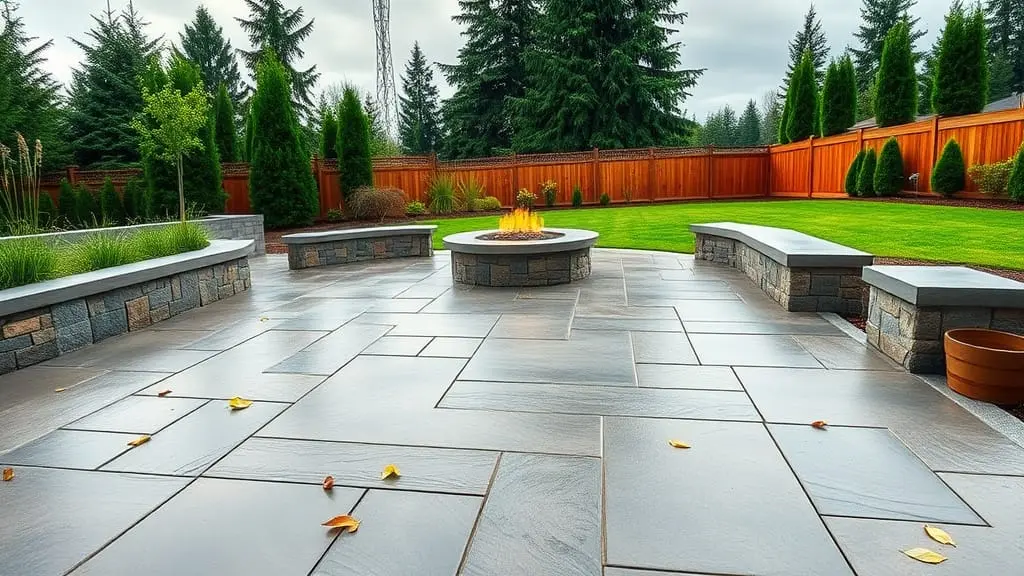
When Bellingham homeowners are ready to upgrade their outdoor living spaces, two decorative concrete options consistently rise to the top of the conversation: exposed aggregate and stamped concrete. Both deliver a striking visual upgrade over plain gray concrete, but their performance in Whatcom County's demanding climate differs in ways that matter for your long-term satisfaction and your wallet.
With 37 inches of annual rainfall, persistent marine moisture rolling off Bellingham Bay, and winter temperatures that hover in the 35-45°F freeze-thaw danger zone, your decorative concrete needs to do more than look good—it needs to survive. After installing hundreds of both exposed aggregate and stamped concrete surfaces across neighborhoods from Fairhaven to Cordata, we can offer a detailed, honest comparison grounded in real-world local experience.
What Are Exposed Aggregate and Stamped Concrete?
Before diving into the comparison, it helps to understand what each finish actually involves. Both start with the same material—a standard concrete pour—but the finishing technique creates dramatically different results.
Exposed Aggregate Basics
Exposed aggregate concrete is created by pouring a standard concrete slab and then removing the top layer of cement paste before it fully cures to reveal the natural stone aggregate embedded within the mix. The result is a textured, pebbled surface that showcases the natural beauty of the stone. In Bellingham, we typically use locally sourced aggregate blends that include river rock, quartz, and granite in earth tones that complement the Pacific Northwest landscape. The aggregate itself is the decorative element—there's no surface coating or stamp pattern involved.
Stamped Concrete Basics
Stamped concrete involves pressing patterns and textures into freshly poured concrete using specialized molds. These stamps replicate the look of natural stone, brick, slate, cobblestone, or even wood planking. Color is added through integral pigments mixed into the concrete and surface-applied color hardeners or release agents. The finished product can be remarkably convincing—many visitors to homes in Edgemoor and the Lettered Streets district can't distinguish quality stamped concrete from genuine flagstone at first glance.
Slip Resistance: A Critical Factor in Bellingham's Rain
In a region where outdoor surfaces stay wet for six months straight—from October through April—slip resistance isn't a luxury feature. It's a safety requirement, especially on patios, pool decks, and sloped walkways.
Exposed aggregate has a clear advantage here. The protruding stones create a naturally rough, textured surface that provides excellent traction even when wet. We've installed exposed aggregate on sloped driveways in South Hill and Silver Beach specifically because homeowners needed reliable footing during Bellingham's rainy months. The texture doesn't diminish over time because the aggregate itself is the wearing surface—it actually improves slightly as natural weathering exposes more stone texture.
Stamped concrete, by contrast, relies on a sealed surface that can become slippery when wet, particularly with high-gloss sealers. The stamped texture does provide some grip, but it's not comparable to exposed aggregate's natural roughness. To mitigate this, we always recommend non-slip additives in the sealer for stamped concrete installations in Whatcom County—a fine grit polymer that significantly improves traction without compromising the appearance. For pool decks, exposed aggregate is almost always the safer choice in our climate.
Durability and Freeze-Thaw Performance
Bellingham's freeze-thaw cycles are the silent destroyer of inferior concrete work. When temperatures drop below freezing—which happens roughly 30-40 nights per year—any moisture trapped in or beneath the concrete surface expands by approximately 9%, creating enormous pressure that leads to cracking, spalling, and surface deterioration.
How Exposed Aggregate Handles Our Winters
Exposed aggregate performs exceptionally well in freeze-thaw conditions for several reasons. The exposed stone surface is naturally porous enough to allow minor moisture migration, reducing the hydraulic pressure that causes spalling. The aggregate stones themselves are typically harder and more freeze-resistant than the cement paste that surrounds them. We've maintained exposed aggregate driveways in Sehome and Alabama Hill that are over 20 years old with minimal freeze-thaw damage—primarily because the surface doesn't trap water the way a sealed surface can.
The key vulnerability is the joints between the aggregate stones. If the cement paste between stones deteriorates, individual pieces of aggregate can pop out—a process called "raveling." Proper air entrainment during the original pour (we specify 5-7% air content for Bellingham installations) and periodic sealing every 3-5 years virtually eliminates this risk.
How Stamped Concrete Handles Our Winters
Stamped concrete's freeze-thaw performance depends almost entirely on its sealer. When the sealer is intact and well-maintained, the surface resists water penetration effectively. However, when the sealer degrades—which happens faster in Bellingham's UV-limited, moisture-heavy environment—water infiltrates the surface and freeze-thaw damage accelerates rapidly. We see this pattern frequently on neglected stamped patios in Birchwood and Cordata: the first sign is usually surface flaking (called "scaling"), followed by color loss and eventually structural cracking.
Stamped concrete requires more diligent sealer maintenance in our climate. Where homeowners in Arizona might reseal every 4-5 years, Bellingham installations need resealing every 2-3 years to maintain protection. Miss a cycle, and the damage compounds quickly.
Maintenance Requirements in the Pacific Northwest
Maintenance is where the two options diverge significantly, and it's often the deciding factor for busy Whatcom County homeowners.
Exposed Aggregate Maintenance
- Sealing: Every 3-5 years with a penetrating sealer (not a film-forming sealer). Cost: $1.00-$2.00 per square foot professionally applied
- Cleaning: Annual pressure washing to remove moss and algae—a near-universal requirement in Bellingham's damp climate. Properties in shaded areas like Samish and Happy Valley may need twice-annual cleaning
- Repairs: Isolated aggregate pop-outs can be patched, though matching the exact stone blend requires some skill. Overall, repairs are straightforward and localized
- Moss treatment: The textured surface can harbor moss in our climate. A zinc sulfate or oxygen bleach treatment in spring keeps growth manageable
Stamped Concrete Maintenance
- Sealing: Every 2-3 years with a film-forming acrylic or polyurethane sealer. Cost: $1.50-$3.00 per square foot professionally applied. This is non-negotiable in Bellingham—skipping a cycle invites damage
- Cleaning: Gentle pressure washing only. Aggressive cleaning can strip sealer and damage color. The recessed pattern lines collect organic debris and require more careful cleaning
- Color touch-ups: UV exposure (even Bellingham's modest sun) and wear gradually fade stamped concrete color. Touch-up applications every 5-7 years help maintain vibrancy
- Crack monitoring: Any crack in stamped concrete is permanent and difficult to repair invisibly. Catching hairline cracks early and sealing them prevents water intrusion and expansion
Bottom line on maintenance: Exposed aggregate is more forgiving of neglect. Stamped concrete rewards diligent care with a longer, more attractive lifespan—but punishes neglect more severely.
Cost Comparison for Bellingham Installations
Cost is naturally a major consideration. Here's what Whatcom County homeowners should budget in the current market.
Installation Costs (2024 Bellingham Market)
Exposed Aggregate:
- Standard local aggregate blend: $12-$18 per square foot installed
- Premium aggregate with specialty stones: $18-$25 per square foot installed
- Typical 400 sq ft patio: $4,800-$10,000
Stamped Concrete:
- Single pattern, single color: $15-$20 per square foot installed
- Complex pattern with multiple colors and borders: $20-$28 per square foot installed
- Typical 400 sq ft patio: $6,000-$11,200
20-Year Total Cost of Ownership
When you factor in maintenance, the cost gap narrows—and in some cases reverses. Exposed aggregate's lower sealing frequency and simpler maintenance routine typically saves $2,000-$4,000 over 20 years compared to stamped concrete of equivalent size. For a standard Bellingham patio, expect to spend $8,000-$15,000 total over 20 years for exposed aggregate versus $10,000-$19,000 for stamped concrete, including all maintenance and minor repairs.
Aesthetics and Design Flexibility
This is where stamped concrete takes the lead. While exposed aggregate offers beautiful natural stone textures in a range of earth tones, it's fundamentally limited to the "pebbled" look. Stamped concrete can replicate virtually any pattern: flagstone, herringbone brick, European cobblestone, random stone, wood plank, and dozens more. Color options are nearly unlimited.
For homeowners in the historic Lettered Streets or Fairhaven districts who want their hardscaping to complement specific architectural styles, stamped concrete's versatility is a significant advantage. We've created convincing sandstone patios, aged brick walkways, and rustic slate entries that perfectly match the character of these neighborhoods.
That said, exposed aggregate has a timeless, organic quality that many Pacific Northwest homeowners prefer. The natural stone aesthetic blends seamlessly with Bellingham's lush landscaping and waterfront settings. Properties in Edgemoor and Boulevard Park often gravitate toward exposed aggregate for this reason—it simply looks like it belongs here.
Best Applications for Each in Bellingham
Choose exposed aggregate for:
- Driveways—superior traction, durability under vehicle traffic, and lower maintenance
- Pool decks and surfaces near water—natural slip resistance is a safety essential
- Sidewalks and walkways—excellent footing in rain, ages gracefully
- Sloped surfaces—where traction matters most during wet Bellingham winters
- Low-maintenance priorities—if you want "set it and forget it" as much as possible
Choose stamped concrete for:
- Patios and entertainment areas—where visual impact is the top priority
- Entries and front walkways—where you want a specific architectural style
- Indoor-outdoor transitions—matching interior flooring patterns
- Properties where you'll commit to regular sealing and maintenance
- Historic or architecturally distinctive homes that benefit from pattern matching
Our Recommendation for Whatcom County Homeowners
There's no universally "better" option—the right choice depends on your specific priorities, property conditions, and maintenance commitment. However, after decades of working across Bellingham and greater Whatcom County, including projects in Ferndale, Lynden, Blaine, and Birch Bay, we can offer this guidance:
If you prioritize safety, low maintenance, and long-term durability, exposed aggregate is the stronger choice for Bellingham's climate. If you prioritize design flexibility and visual impact and are willing to invest in regular sealing and maintenance, stamped concrete delivers results that exposed aggregate simply cannot match aesthetically.
Many of our clients opt for a combination—exposed aggregate on driveways and walkways where function matters most, with stamped concrete on patios and entries where visual impact takes priority. This hybrid approach gives you the best of both worlds while keeping maintenance manageable.
Ready to get started? Contact us today for a free estimate — we serve all of Bellingham and Whatcom County.