
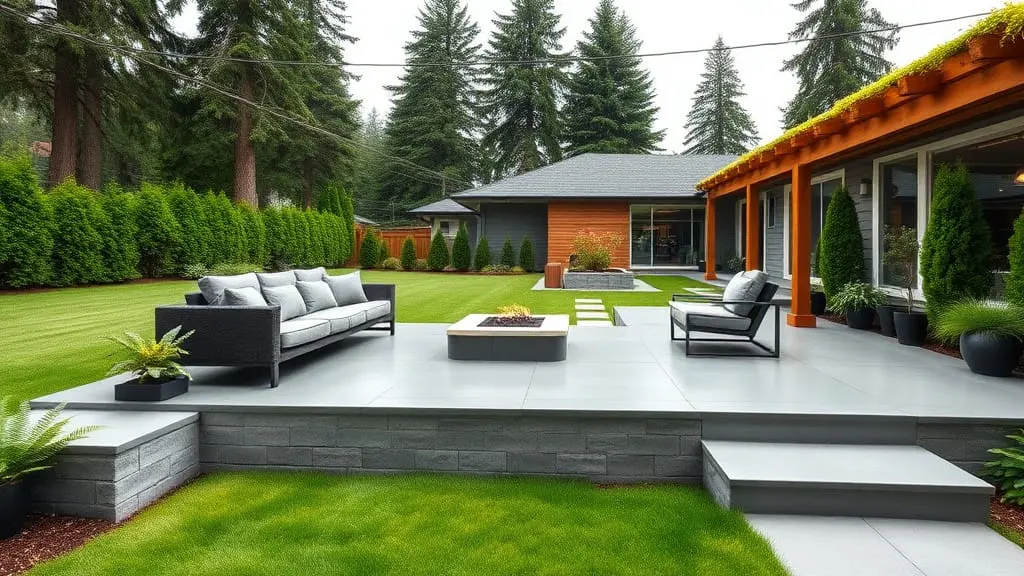
Bellingham homeowners have a complicated relationship with their backyards. We live in one of the most beautiful natural settings in the country, surrounded by mountains, water, and evergreen forests, yet our 37 inches of annual rainfall and overcast skies from October through April can make outdoor living feel like a seasonal luxury. The good news is that a well-designed concrete patio can transform your backyard into a year-round living space that embraces the Pacific Northwest climate rather than fighting it.
As patio installation specialists serving Bellingham and Whatcom County, we have built hundreds of patios across every neighborhood from Fairhaven to Ferndale. The designs that work best here are not the same ones you see in Arizona home magazines. Our most successful patios are designed specifically for the way Bellingham residents actually live outdoors: layered, sheltered, and built to handle moisture year-round.
Designing for the Pacific Northwest Lifestyle
Before choosing a finish color or stamp pattern, the most important design decision for a Bellingham patio is how it relates to weather protection. We approach every patio design by dividing the space into zones based on exposure and use.
The Three-Zone Approach
The most successful Bellingham patios incorporate three distinct zones:
- Covered zone (directly off the house): This is your dry-weather and wet-weather living room. Typically 10-16 feet deep, protected by a solid roof extension, pergola with a polycarbonate roof, or retractable awning. This zone gets the most use year-round and should accommodate your primary seating and dining furniture.
- Transitional zone (partially covered or open): An intermediate area that might be covered by a pergola with open slats, allowing dappled light and some rain penetration. This zone works well for a bar area, herb garden, or secondary seating that gets used in fair weather and can tolerate occasional moisture.
- Open zone (fully exposed): The portion of your patio that is open to sky. This is where a fire pit, hot tub pad, or open-air lounge area works best. In Bellingham, this zone gets heavy use from May through September and occasional use during dry spells in the shoulder seasons.
This zoned approach is how we design patios in Sehome, Happy Valley, and South Hill, where homeowners want maximum year-round use. The key is making each zone feel intentional rather than like an afterthought.
Fire Pit Integration
Fire pits have become the single most requested patio feature in our Bellingham projects. There is something about sitting around a fire on a cool Pacific Northwest evening, perhaps with a view of the San Juan Islands or Mount Baker, that resonates deeply with life in this region.
Built-In vs. Portable Fire Pits
A built-in fire pit integrated into your concrete patio creates a permanent focal point and gathering space. We typically construct these with a concrete or block base, firebrick lining, and a decorative concrete cap that matches the surrounding patio finish. Built-in fire pits range from $2,500 to $6,000 depending on size, materials, and whether they use wood or gas.
For homeowners who want flexibility, we design a reinforced fire pit pad within the patio, a thicker concrete section (6 inches minimum) with a heat-resistant finish, where a portable fire pit or fire table can be placed. This approach costs significantly less and allows you to relocate or replace the fire feature as your tastes evolve.
Fire Pit Seating Design
The patio area surrounding a fire pit should be at least 16-20 feet in diameter to accommodate seating at a comfortable distance from the heat. We often incorporate concrete seating walls around the fire pit perimeter, typically 18 inches high and 12-14 inches deep, creating built-in bench seating that doubles as a retaining element on sloped yards. These seating walls are popular in South Hill and Alabama Hill backyards where terrain changes create natural opportunities for multi-level design.
On a 400-square-foot patio, a fire pit area with surrounding seating wall typically occupies about 100-120 square feet. Budget an additional $3,000-$7,000 for the seating wall and fire pit combination above the base patio cost.
Multi-Level Patio Designs
Bellingham's hilly terrain makes multi-level patios a natural fit. Rather than fighting the slope with massive retaining walls to create one flat surface, stepping the patio down the hillside creates visual interest, defines distinct use areas, and reduces the engineering costs associated with major grade changes.
Step-Down Designs
A typical multi-level patio in a Sehome or Edgemoor backyard might include an upper level at the back door for dining (200-300 square feet), steps down to a mid-level lounge area (150-250 square feet), and a lower level fire pit zone (100-150 square feet). Each level drop is typically 6-12 inches, requiring only simple steps rather than full retaining walls.
The transitions between levels provide natural design opportunities. We often incorporate low planters, lighting recesses, or decorative borders at each step. Wide, shallow steps (at least 4 feet wide with 11-inch treads and 6-inch risers) are both safer and more visually inviting than narrow, steep stairs.
Raised Patios
On properties where the grade drops away from the house, a raised patio with a retaining wall perimeter creates a level outdoor space with built-in views. We have built raised patios in Edgemoor overlooking Bellingham Bay and in Silver Beach with Lake Whatcom views. These projects require more substantial structural engineering, including compacted fill, reinforced retaining walls, and proper drainage behind the walls, but the result is often the most dramatic outdoor space in the neighborhood.
Outdoor Kitchen Connections
Outdoor kitchens have evolved well beyond a standalone grill on the patio. In Bellingham, where the food culture embraces local seafood, craft beverages, and farm-to-table cooking, homeowners are investing in outdoor cooking spaces that function as genuine second kitchens.
Concrete Countertop and Base Design
We build outdoor kitchen bases from concrete block with a poured concrete countertop, creating a durable, weather-resistant structure that integrates seamlessly with the patio surface. Standard outdoor kitchen dimensions include a minimum 24-inch-deep countertop and 36-inch height. Most functional configurations include a grill station (4-6 feet wide), a prep area with sink (3-4 feet), and a bar or serving counter (4-8 feet).
The concrete patio beneath an outdoor kitchen should be reinforced and thickened to support the concentrated loads. We typically pour a 6-inch slab with rebar in the kitchen area, even if the surrounding patio is standard 4-inch thickness. Utility trenches for gas, water, and electrical are formed into the slab before the pour, avoiding the need to cut into finished concrete later.
Placement and Flow
Optimal outdoor kitchen placement puts the cooking area within the covered zone of your patio (so you can grill in the rain, a necessity in Bellingham) with the serving counter opening to the transitional or open zone where guests gather. We position the kitchen to maintain clear sight lines to the yard and any view, so the cook is never isolated from the gathering.
A well-designed outdoor kitchen with concrete base, countertops, and utility connections adds $8,000-$20,000 to your patio project, depending on size and complexity. Appliances are additional and selected by the homeowner.
Finish Options That Thrive in Bellingham's Climate
The finish you choose for your patio affects aesthetics, maintenance, safety, and longevity. In our wet, mossy climate, some finishes perform dramatically better than others.
Broom Finish
The classic broom finish remains the most practical choice for Bellingham patios. The textured surface provides excellent traction when wet, resists moss adhesion better than smooth finishes, and hides minor surface imperfections that develop over time. A broom finish patio looks clean and contemporary when paired with modern furniture and landscaping. Cost: no premium over base concrete pricing.
Exposed Aggregate
Exposed aggregate is arguably the best all-around patio finish for our climate. The revealed stone surface provides natural traction, visual interest, and excellent durability. Local aggregate blends featuring Nooksack River stone create a finish that looks like it belongs in the Pacific Northwest landscape. Exposed aggregate also hides staining better than smooth finishes and cleans up easily with a pressure washer. Cost premium: $3-$6 per square foot over standard concrete.
Stamped Concrete
Stamped concrete offers the widest range of decorative options, from natural stone patterns to brick and wood plank textures. In Bellingham, we recommend patterns with sufficient texture depth to provide wet-weather traction. Ashlar slate, flagstone, and cobblestone patterns work well. Shallow patterns or those requiring heavy sealer coats can become slippery when wet and are more susceptible to moss growth in shaded areas common in Samish and Birchwood backyards. Cost premium: $8-$15 per square foot over standard concrete.
Stained or Colored Concrete
Integral color (mixed into the concrete) or acid staining (applied after curing) provides rich, earthy tones that complement Pacific Northwest landscaping. Warm browns, terra cotta, and slate gray are the most popular colors in our Bellingham projects. Integral color is more durable than surface-applied stains in our climate because it extends through the full slab thickness, so surface wear does not reveal a different color beneath. Cost premium: $2-$5 per square foot for integral color, $4-$8 per square foot for acid staining.
Lighting Design for Extended Use
With sunset arriving as early as 4:15 PM in December, lighting is not a luxury for Bellingham patios; it is a functional necessity for half the year. Integrating lighting into the concrete patio design during construction is far more effective and affordable than retrofitting later.
Built-In Lighting Options
- Step lights: LED fixtures recessed into step risers between patio levels. Essential for safety and elegant in appearance. Plan conduit runs during the forming stage.
- Perimeter lighting: Low-voltage LED strips or individual fixtures mounted in seating walls or along patio edges. These provide ambient illumination without glare and define the patio boundaries after dark.
- Fire pit glow: A gas or wood fire pit provides significant ambient light. Position your fire pit as the evening focal point and supplement with low-level perimeter lighting.
- Overhead string lights: While not built into the concrete, planning the anchor points (posts, wall brackets, or pergola attachment points) during patio construction ensures a clean, permanent installation. String lights are the most popular outdoor lighting choice among our Bellingham clients.
Budget $1,500-$4,000 for integrated patio lighting, including conduit, low-voltage transformer, and LED fixtures. This investment extends your patio use by hours each day during the darker months and creates ambiance that transforms the space after sunset.
Furniture-Friendly Finish Considerations
The patio surface needs to work with your furniture, not against it. Heavy concrete or wrought-iron furniture sits fine on any finish, but lightweight aluminum chairs can rock on aggressive broom textures, and fine-legged modern furniture can catch in deep stamp patterns.
For dining areas, we recommend a medium broom finish or a stamped pattern with moderate texture. For lounge areas with low, wide-footed furniture, exposed aggregate or heavier textures work beautifully. Fire pit areas with Adirondack chairs benefit from a slightly smoother finish that allows the chairs to slide into position.
Also consider patio furniture pad placement. Many homeowners in Cordata and Barkley Village request slightly recessed areas within the patio surface, typically a half-inch lower and with a smoother finish, specifically for dining table placement. This subtle detail keeps the table perfectly level and prevents chairs from wandering on a textured surface.
Getting Started with Your Bellingham Patio Project
The best time to plan a Bellingham patio is during winter, when contractors have availability for design consultations and the ground conditions are visible at their most challenging. This lets us design drainage and grading solutions based on real wet-season conditions rather than optimistic summer assumptions. Construction typically begins in late spring, as soon as consistent temperatures above 50 degrees Fahrenheit allow proper concrete curing.
We provide free design consultations throughout Bellingham and Whatcom County. Our process includes an on-site visit to assess your yard's grade, drainage, sun exposure, views, and access conditions, followed by a detailed proposal with layout options, finish samples, and transparent pricing. Whether you are envisioning a simple 200-square-foot sealed concrete pad or a multi-level outdoor living complex with kitchen, fire pit, and lighting, we will help you create a patio that works for Bellingham's climate and your lifestyle.
Ready to get started? Contact us today for a free estimate — we serve all of Bellingham and Whatcom County.