
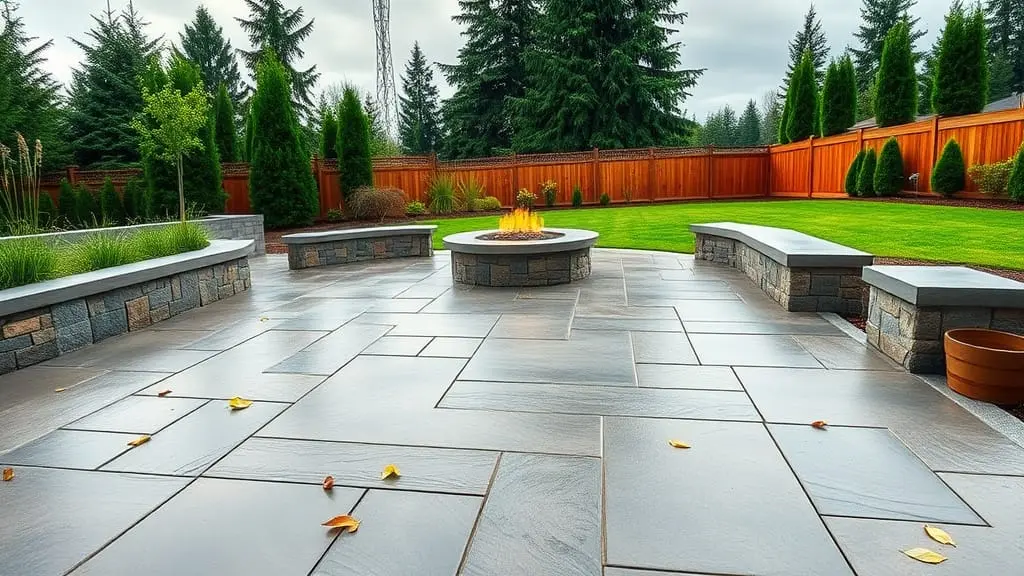
Plain gray concrete is functional, but it does not do much to enhance your home's curb appeal or outdoor living space. Colored concrete transforms driveways, patios, walkways, and pool decks from utilitarian surfaces into design features that complement your home's architecture and Bellingham's natural landscape. But not all coloring methods perform equally in our Pacific Northwest climate. The combination of 37 inches of annual rainfall, persistent dampness from October through April, moss and algae growth, UV exposure during summer, and freeze-thaw cycles through winter creates conditions that test every concrete coloring approach differently.
This guide breaks down the four primary concrete coloring methods available to Bellingham homeowners, explains how each performs in our specific climate, and helps you choose the right approach for your project, budget, and long-term maintenance expectations.
Integral Color: Color Mixed Into the Concrete
Integral color is added directly to the concrete mix at the batch plant before it arrives at your property. The pigment, typically iron oxide-based, disperses throughout the entire depth of the slab. This means the color goes all the way through the concrete rather than sitting on top.
How It Performs in Bellingham's Climate
Integral color is the most durable coloring method for Whatcom County conditions. Because the pigment exists throughout the full slab thickness, surface wear, minor chipping, and abrasion do not reveal a different color underneath. Rain, freeze-thaw cycles, and foot traffic affect the surface texture over time but the color remains consistent.
Iron oxide pigments used in quality integral color products are inherently UV-stable. They do not fade significantly from sun exposure, even on south-facing patios and driveways in Geneva, Columbia, and Sunnyland that receive full afternoon sun during summer months. This UV resistance is a major advantage in the Pacific Northwest, where surfaces alternate between months of overcast dampness and weeks of intense summer sun.
The main limitation of integral color in our climate is that it does not protect the concrete surface from moisture penetration. Colored concrete still requires sealing to prevent water absorption that leads to freeze-thaw damage and efflorescence, a white powdery deposit that forms when moisture carries mineral salts to the surface. Efflorescence is particularly common during Bellingham's wet season and can temporarily obscure or mute integral color on unsealed surfaces.
Cost and Available Colors
Integral color adds $2-$4 per square foot to the cost of a standard concrete pour. For a 400-square-foot driveway, that is an additional $800-$1,600 over standard gray concrete. The color range includes earth tones (buff, tan, sandstone, terra cotta), grays (light gray, pewter, charcoal), and accent colors (brick red, adobe). Deeper, more saturated colors require more pigment and cost slightly more.
For Bellingham homes, the most popular integral colors are sandstone for homes with warm-toned siding, pewter for modern exteriors, and charcoal for contemporary designs. We consistently steer clients away from very light integral colors like buff and cream because they show every stain and moss spot in our damp climate, requiring significantly more maintenance to keep looking clean.
Acid Stain: Chemical Reaction Coloring
Acid stain is applied to cured concrete. It contains metallic salts in an acidic solution that chemically reacts with the lime and mineral content in the concrete surface. The result is a translucent, variegated color with a natural, mottled appearance that no other coloring method can replicate.
Performance in Pacific Northwest Conditions
Acid stain produces stunning results on protected surfaces, but its performance in exposed exterior applications in Bellingham is mixed. The stain penetrates the concrete surface by 1-2 millimeters, which is deeper than water-based stains but still relatively shallow compared to integral color. On covered patios, entryways under overhangs, and interior garage floors, acid stain can look spectacular for many years with proper sealing.
On fully exposed outdoor surfaces in our climate, acid stain faces several challenges. Heavy rainfall gradually erodes the stained layer, particularly in areas where water concentrates such as drip lines and drainage paths. Freeze-thaw cycles can cause microscopic surface flaking that removes the stained concrete along with it. And the translucent, variegated appearance that makes acid stain beautiful also means that any surface damage is highly visible.
We recommend acid stain primarily for covered outdoor spaces, vertical surfaces like retaining wall faces, and accent areas that receive limited direct weather exposure. For fully exposed patios and driveways in Bellingham, integral color or a combination of integral color with accent staining delivers better long-term results.
Cost and Color Range
Professional acid stain application costs $4-$8 per square foot, including surface preparation, stain application, neutralization, and sealing. The color palette is limited to earth tones because the chemical reaction works with specific metallic salts. Common acid stain colors include amber, walnut, English red, cola, and various green and blue-green patinas from copper-based formulas. The final color depends partly on the concrete's mineral content, so results vary between pours. Test areas are essential.
Water-Based Stain: Controlled Color Application
Water-based concrete stains use acrylic polymers carrying fine pigment particles that penetrate the concrete surface and bond within the pore structure. Unlike acid stains, water-based stains do not rely on a chemical reaction, which makes them more predictable and available in a much wider color range.
Bellingham Climate Performance
Water-based stains have improved significantly in recent years, and quality professional-grade products from manufacturers like Scofield, Solomon, and Brickform perform reasonably well in our climate when properly sealed. The stain penetrates 1-2 millimeters into the concrete surface and bonds mechanically within the pore structure.
The critical factor for water-based stain durability in Bellingham is sealer maintenance. Without a quality sealer maintained on a 2-3 year cycle, water-based stain will gradually fade and wear, particularly in high-traffic areas. Properties in Fairhaven, South Hill, and Sehome where foot traffic is concentrated on walkways and front entries may need more frequent sealer maintenance than patios that receive less wear.
One significant advantage of water-based stain is its ease of reapplication. Unlike acid stain, which produces a one-time chemical reaction, water-based stain can be reapplied over existing applications to refresh or modify the color. This makes it a practical choice for homeowners who want to change their color scheme down the road without the cost of concrete resurfacing.
Cost and Color Options
Professional water-based stain application runs $3-$6 per square foot, slightly less than acid stain because the application process is simpler and does not require a neutralization step. The color range is effectively unlimited. Any color can be mixed, from subtle earth tones to bold primaries, though natural tones remain the most popular choice in Bellingham's PNW landscape.
Concrete Dye: Maximum Color Intensity
Concrete dyes are the newest coloring technology in the decorative concrete industry. They use ultra-fine pigment particles dissolved in solvent or water carriers that penetrate deeply into the concrete surface. Dyes produce the most intense, vibrant colors of any coloring method.
PNW Climate Considerations
Concrete dyes have a significant limitation for exterior use in Bellingham: most formulations are not UV-stable. Exposure to sunlight causes fading, sometimes dramatically within the first year on a south-facing exterior surface. This makes dyes primarily an interior product in our region, excellent for garage floors, basement slabs, and covered areas that receive no direct sunlight.
Some newer UV-resistant dye formulations have entered the market, and we are monitoring their long-term performance in our climate. Early results suggest improved fade resistance, but we do not yet have five-year data for exposed exterior applications in the Pacific Northwest. For clients in Edgemoor, Birchwood, or other neighborhoods wanting bold color on exposed concrete, we currently recommend integral color or water-based stain over dyes until the newer formulations have a longer track record in our climate.
Cost and Applications
Dye application costs $2-$5 per square foot. The affordability and color intensity make dyes popular for large interior commercial floors and residential garage makeovers. Combined with a high-quality epoxy or polyurethane topcoat, dyed concrete floors can withstand heavy use for a decade or more in protected environments.
Choosing the Right Method for Your Project
Each coloring method has an ideal application in Bellingham's climate. Here is our recommendation based on project type:
- Exposed driveways and sidewalks: Integral color is the clear winner. It survives traffic, weather, and decades of Bellingham rain without color loss. Pair with a penetrating sealer for maximum longevity
- Exposed patios: Integral color as the base, optionally enhanced with hand-applied water-based stain accents in individual stamped concrete stones for natural variation
- Covered patios and outdoor kitchens: Acid stain or water-based stain produce beautiful results on protected surfaces. The covered environment extends color life significantly
- Retaining walls and vertical surfaces: Acid stain creates a natural stone appearance that weathers gracefully on vertical surfaces where water runs off rather than pooling
- Interior floors and garages: Dye with epoxy or polyurethane topcoat delivers maximum color impact where UV exposure is not a concern
- Pool decks: Integral color with non-slip finish. Chlorinated water splash and constant wet conditions demand through-body color that will not wear off
Color Selection for Bellingham Home Exteriors
The best concrete colors for your property depend on your home's exterior palette. Here are guidelines we have developed from hundreds of color consultations across Whatcom County.
Matching Common Bellingham Home Styles
- Craftsman bungalows (Lettered Streets, York, Samish): Warm sandstone or autumn brown integral color. These earth tones complement the natural wood elements, stone accents, and warm paint palettes common to craftsman architecture
- Modern and contemporary (Cordata, Barkley Village): Pewter, medium gray, or charcoal integral color. Clean, cool tones align with the fiber cement siding, metal accents, and neutral palettes of modern design
- Pacific Northwest rustic (Sudden Valley, Silver Beach, Edgemoor): Forest brown or driftwood gray that harmonize with cedar siding, natural stone elements, and the surrounding evergreen forest
- Colonial and traditional (Ferndale, Lynden): Brick-toned accents or slate gray base colors that reference traditional masonry without the weight and maintenance of actual brick
Maintaining Colored Concrete in Bellingham's Climate
Regardless of the coloring method, maintenance determines how long your colored concrete looks its best. In our climate, sealing is the single most important maintenance task.
- Seal every 2-3 years: Bellingham's rainfall and humidity break down sealers faster than drier climates. A penetrating silane or siloxane sealer applied every two to three years protects both the concrete and the color from moisture damage and efflorescence
- Clean before resealing: Power wash to remove moss, algae, and accumulated dirt before applying new sealer. Sealing over organic growth traps it and can cause discoloration
- Address moss early: Moss roots produce mild acids that can etch colored concrete surfaces over time. Treat moss growth with a concrete-safe cleaner as soon as it appears rather than letting it establish
- Avoid deicing chemicals: Rock salt, magnesium chloride, and other deicers can damage colored concrete surfaces. Use sand for traction on icy colored concrete during Bellingham's occasional freeze events
Getting the Color Right
Color selection from a sample chip or catalog photo is unreliable. Concrete color appears different depending on lighting conditions, surrounding materials, and surface texture. A sandstone color chip viewed indoors under warm lighting looks very different from the same color on a 400-square-foot patio under Bellingham's cool, overcast sky.
We pour test samples on-site for every colored concrete project. These 2-by-2-foot sample slabs cure on your property for several days, allowing you to evaluate the color in morning light, afternoon light, overcast conditions, and after rain. This small investment of time and material prevents expensive color regret on a project that will last decades. Our sample service is complimentary for all contracted projects throughout Bellingham, Ferndale, Lynden, Blaine, Birch Bay, Everson, and Sumas.
Ready to get started? Contact us today for a free estimate — we serve all of Bellingham and Whatcom County.